Start with what the rules allow
Hove has a great many protected fronts, and external wall insulation always changes the thickness and look of a wall. Three examples show the range:
- In Brunswick Square, Brunswick Terrace and Brunswick Place, the Hove Borough Council Act 1976 requires the fronts to be maintained unaltered and repainted every five years, so insulating them from the outside is off the table.
- In The Avenues, and parts of Cliftonville and The Drive, an Article 4 direction brings almost every alteration that affects a building's appearance under planning control, and rules out textured paint and stone cladding.
- Woodland Drive in West Blatchington is a 1930s conservation area whose clay tiles, half-timbered gables and dark brickwork were praised by the council for their use of natural materials. Covering that brick would erase what makes the street special.
For any house in a conservation area, the place to start is PAN08, the council's planning advice note dealing with external wall insulation.
Houses where it makes sense
Outside those streets there is plenty of scope. Hangleton was built up with council and private houses between the 1930s and the 1950s, and Mile Oak, at the city's north-western corner, grew from the 1930s on, with a central focus forming along Chalky Road after the Second World War. Homes there that are already rendered or pebble dashed, or whose rear and side walls are out of public view, are often good candidates. Mile Oak runs right up to the edge of the South Downs, and houses on the higher ground catch more wind and rain than those near the seafront.
How a board system is fitted
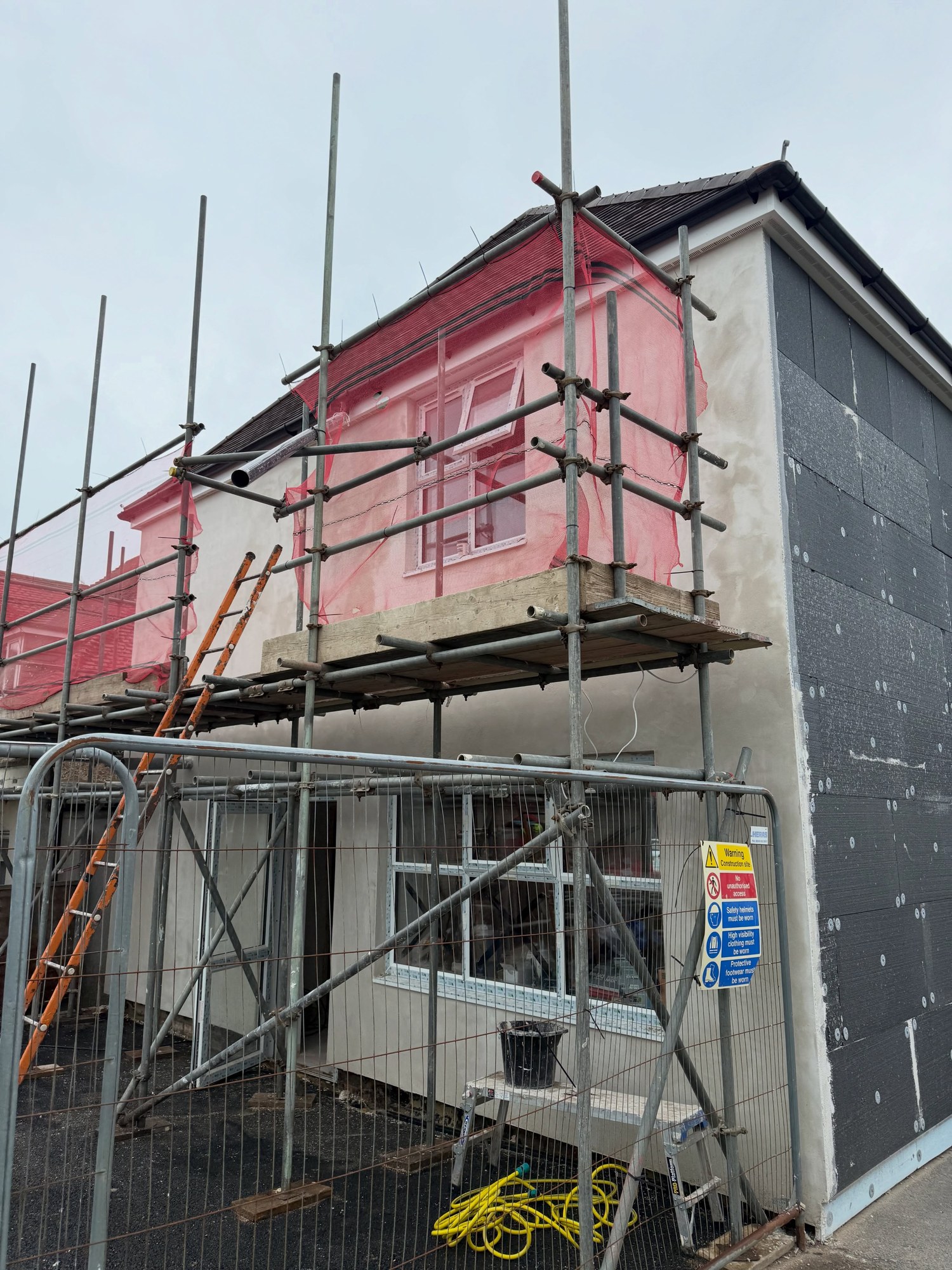
The wall is surveyed and everything attached to it noted, from downpipes and lights to meter boxes and flues. A level starter track goes on just over the DPC, then insulation boards, EPS among them, are bonded on and mechanically fixed with tight, staggered joints. Mesh is bedded into a basecoat over the boards, beads protect corners and openings, and a render top coat finishes the job. A through-coloured silicone coat is a common choice because it never needs painting; our silicone rendering in Hove page explains that finish. Window sills and eaves must be extended to suit the deeper wall, and a semi needs a weathered stop where it meets the house next door.
Cork render where boards will not do
Cork render goes on as a thicker coat than ordinary render, insulates a little and lets moisture escape, which suits old solid walls and spots where boards would crowd window reveals and eaves. In Portslade Old Village, where flint walls and cottages give the conservation area its character, it is better kept to walls that are already rendered.
When the outside has to stay as it is
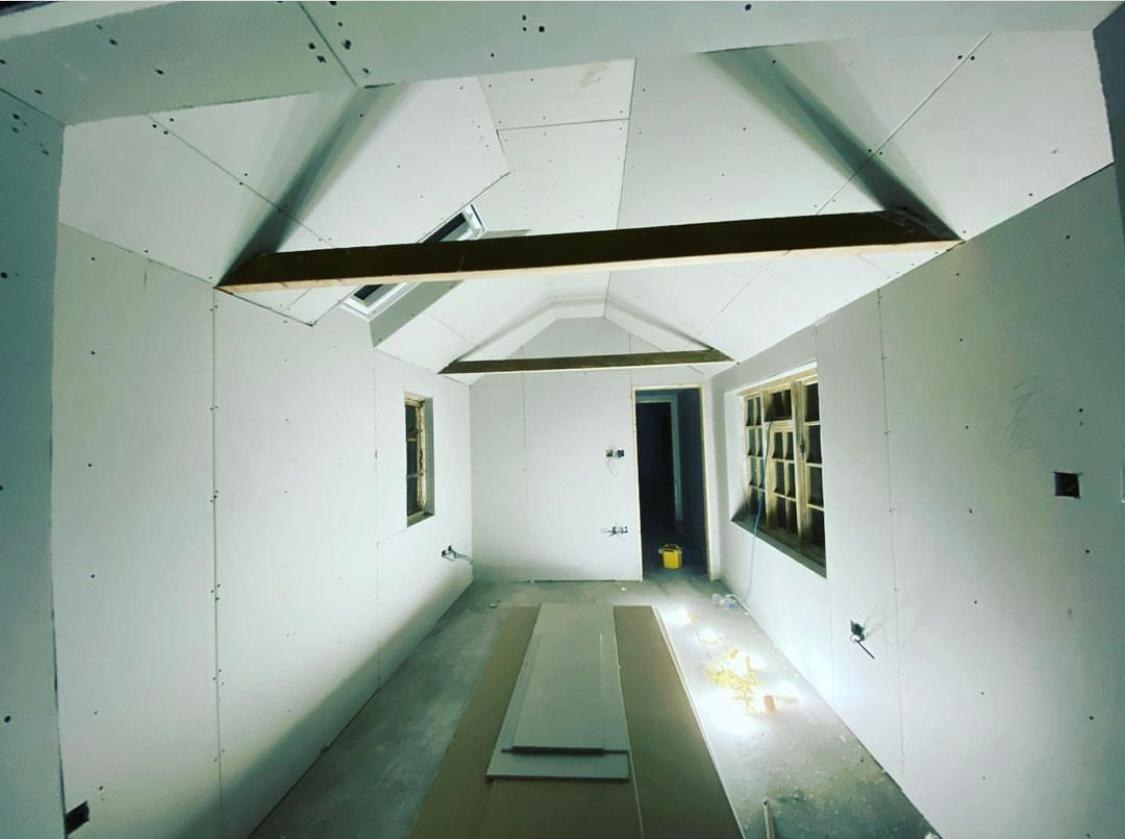
Insulating from the inside keeps a protected façade untouched and can be done room by room: see plasterboarding and dry lining in Hove. If the building is listed, the council expects listed building consent for most energy-saving alterations, internal ones included. We work right across Hove and Portslade, and general details of each system are on our external wall insulation and cork render page. For free advice with no obligation, phone 07824 165672.