Houses that suit it
Silicone render works best on walls that are already rendered or pebble dashed, or on new masonry, where a crisp, low-maintenance finish is wanted. In Hove, that can include many homes away from the historic centre. Aldrington, once meadow land stretching west from the old village, is now a residential area of late 19th and early 20th-century villa-style houses on tree-lined roads. Hangleton, West Blatchington, the Knoll estate and Mile Oak were built up between the 1930s and the later decades of the 20th century. Rear extensions and side elevations on older houses are also good candidates, because they can be less sensitive in planning terms than a street-facing front.
A job from the other end of the city
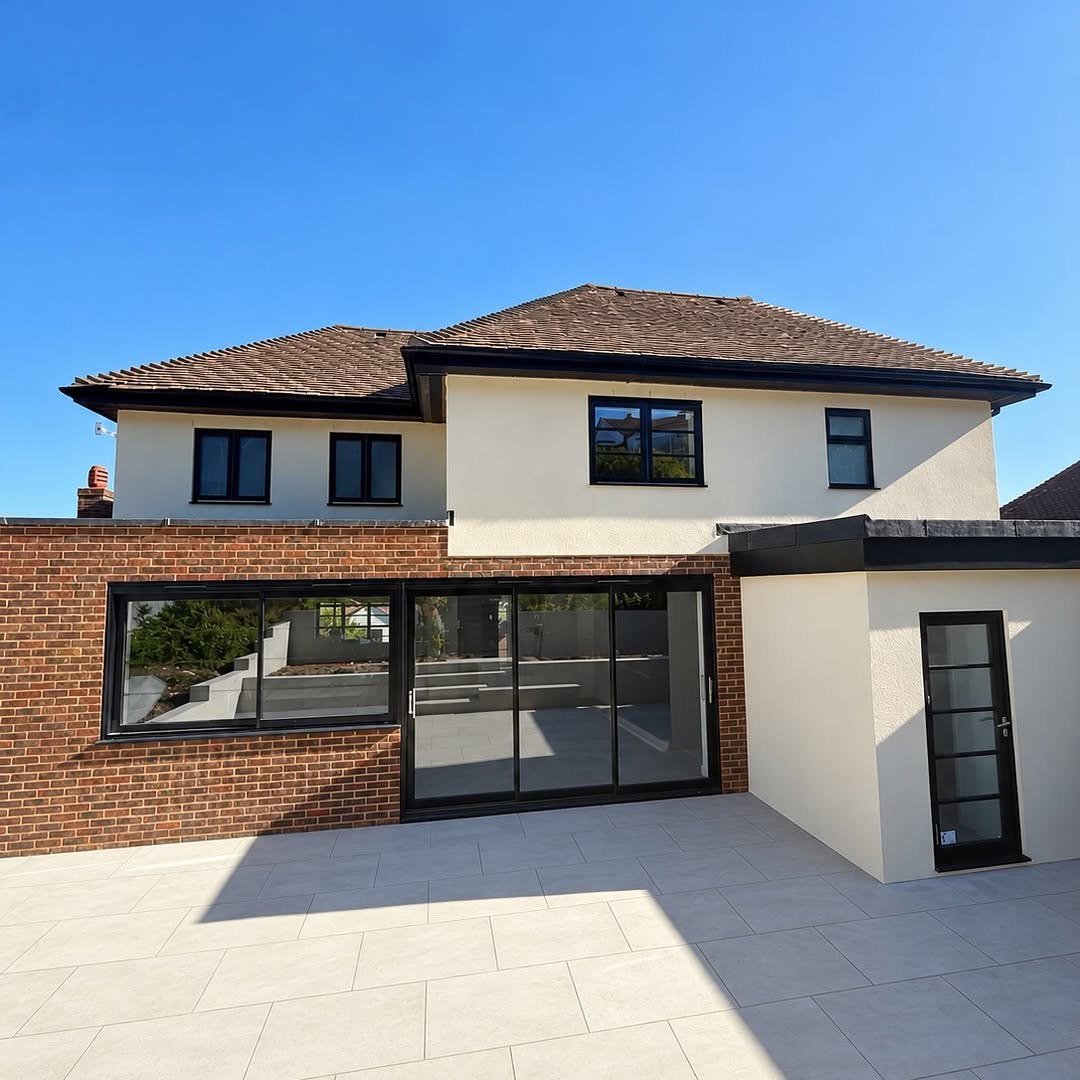
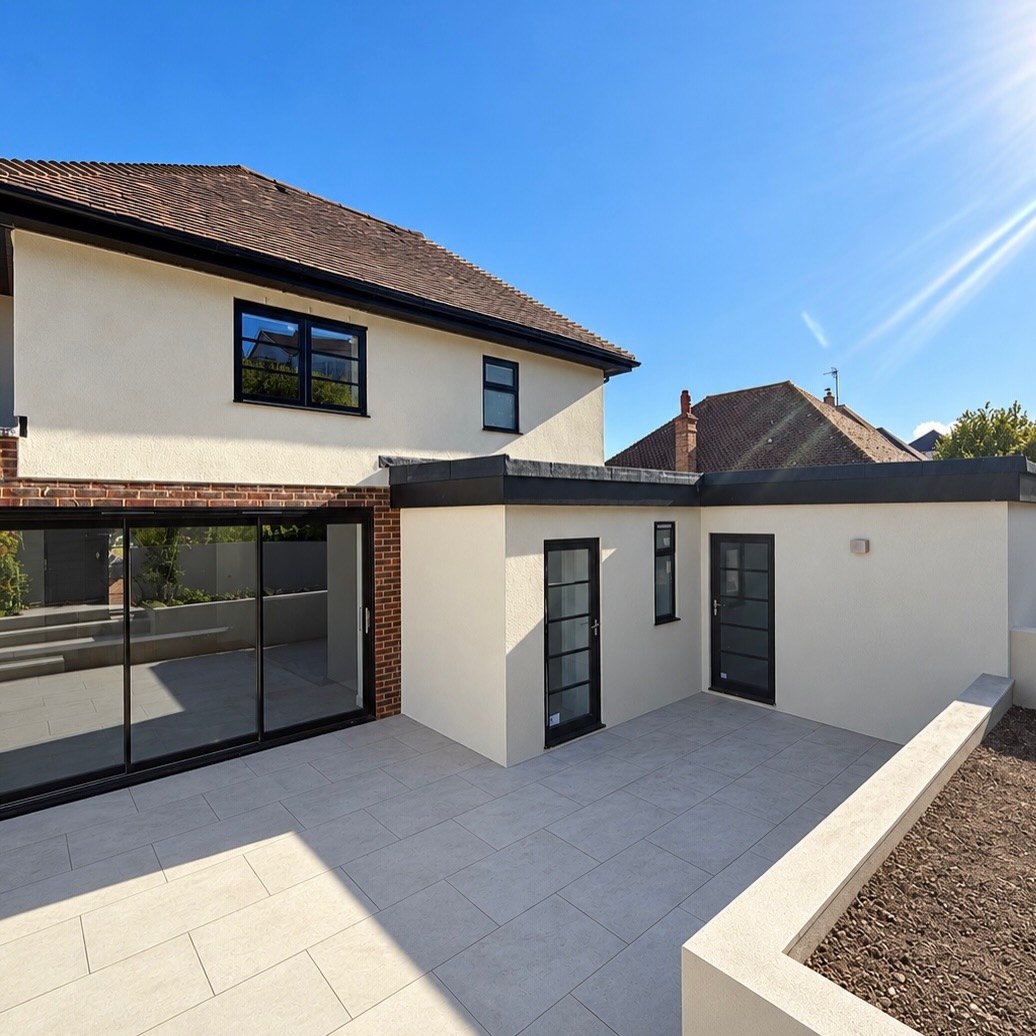
Our own example is at Saltdean, on the far eastern side of Brighton and Hove. There, our part in a house being reconfigured and extended grew into replastering it from top to bottom inside, and its walls now wear a through-coloured silicone coat in a shade called Prosecco, which makes the new wing and the original house look like one. The photo above is from that job, and more are on our projects page.
What the system involves
The old surface is sounded out and anything hollow or crumbling is removed, because new render is only as good as what it is fixed to. Corner, stop and bell-cast beads go on next, the last set just above the damp proof course. A basecoat follows with reinforcing mesh pressed into it to resist cracking, then a tinted primer, and finally the silicone top coat, applied thinly and worked to an even grain. The colour runs right through it, so it never needs repainting, and the surface repels rain while letting moisture vapour escape from the wall.
The protected streets
Silicone is ruled out wherever the law or planning fixes how a front must look. The fronts of the original Brunswick estate are kept as built and painted Brunswick Cream on a five-yearly cycle set by a 1976 Act. The Avenues direction allows only a short palette of pale, smooth, matt colours on a façade and forbids textured paint, so a coloured, grained top coat on a front there would need consent that is unlikely to fit the rules. On the 1930s Woodland Drive estate, the houses take their character from natural materials, clay tile, timbered gables and dark brick, that a render would simply cover up. Our page on rendering in Hove covers traditional repairs for streets like these.
Choosing colour and timing
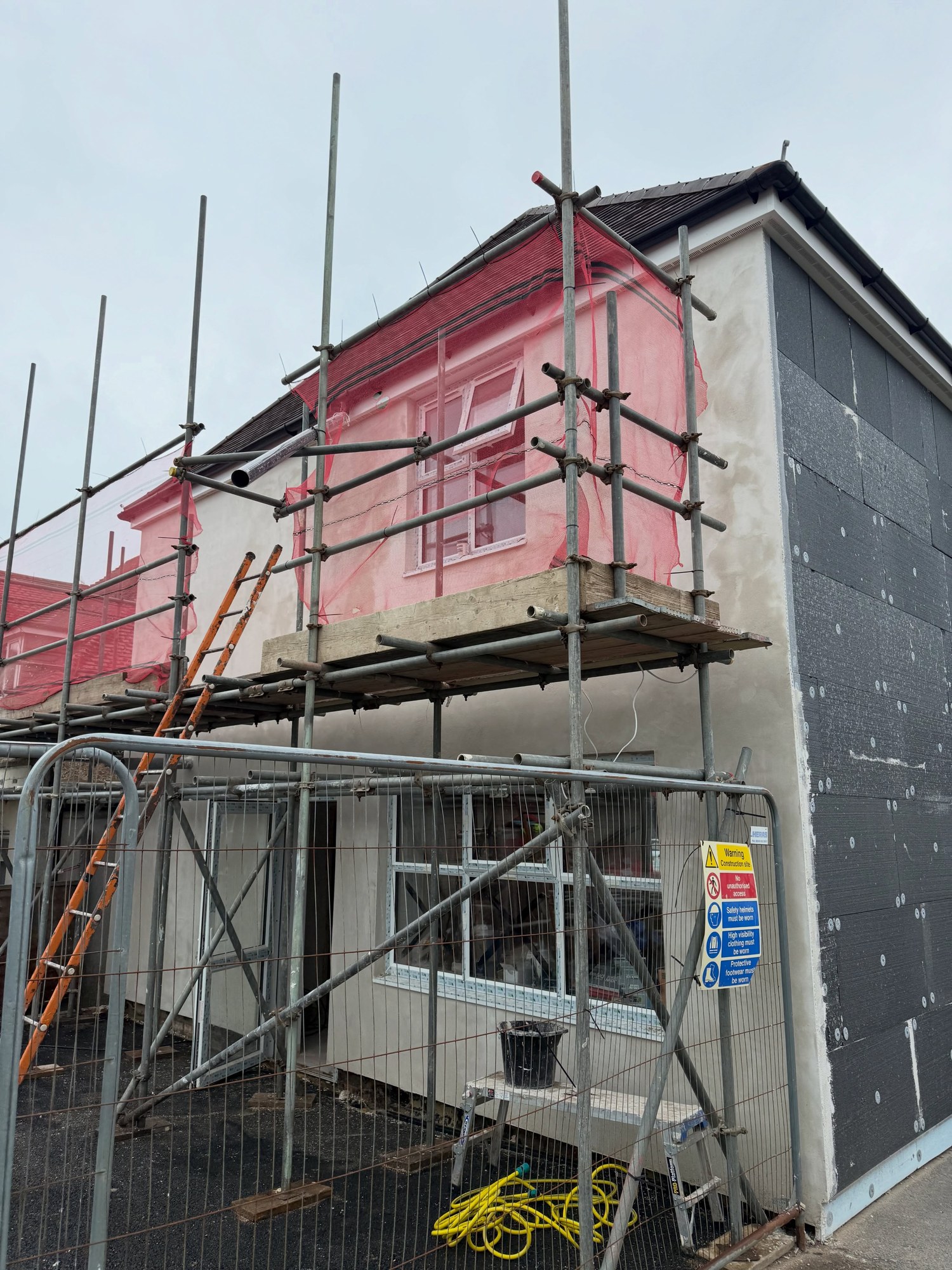
Pale greys and creams sit comfortably beside Hove's painted villas, while stronger colours can look out of place in a street of matching fronts. Look at sample panels outside, in daylight, before deciding. Silicone systems should not go on in frost, rain or hard drying sun, so most external work in Hove is booked between late spring and early autumn, and fine-weather slots fill up first. If you want to insulate as well, the same finish can go over insulation boards, as described on our page about external wall insulation in Hove. We cover the whole of Hove and Portslade, and our main silicone rendering page explains the system further. Quotes are free and carry no obligation: ring 07824 165672.