Rendering, inside and out
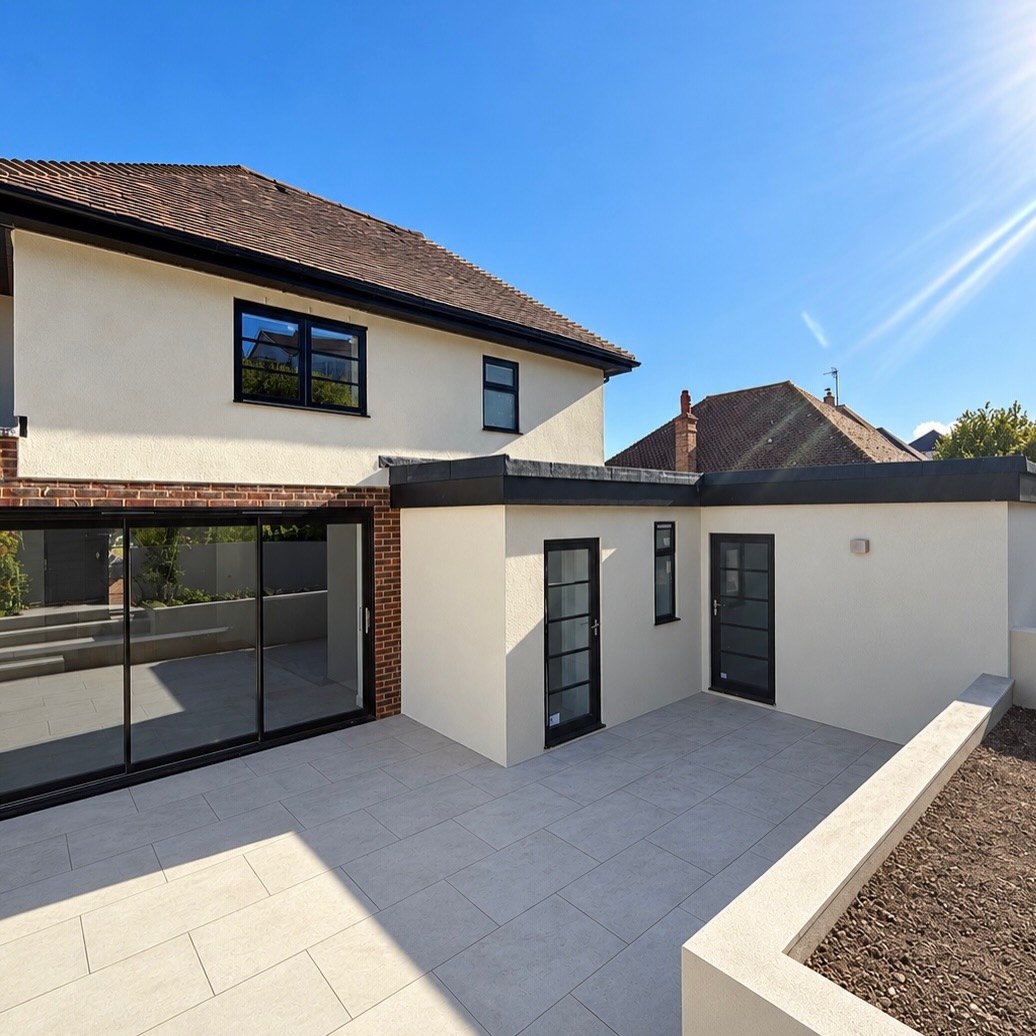
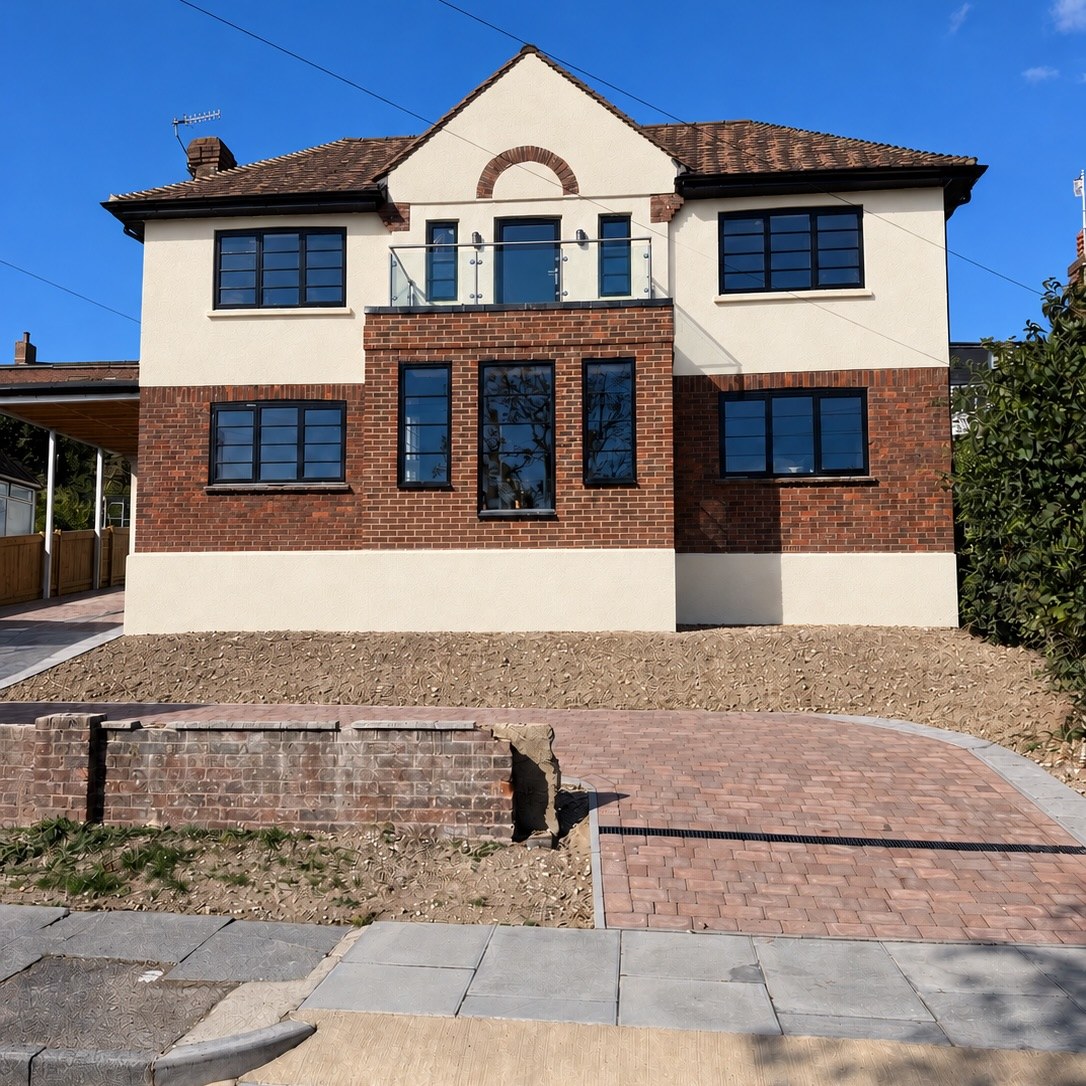
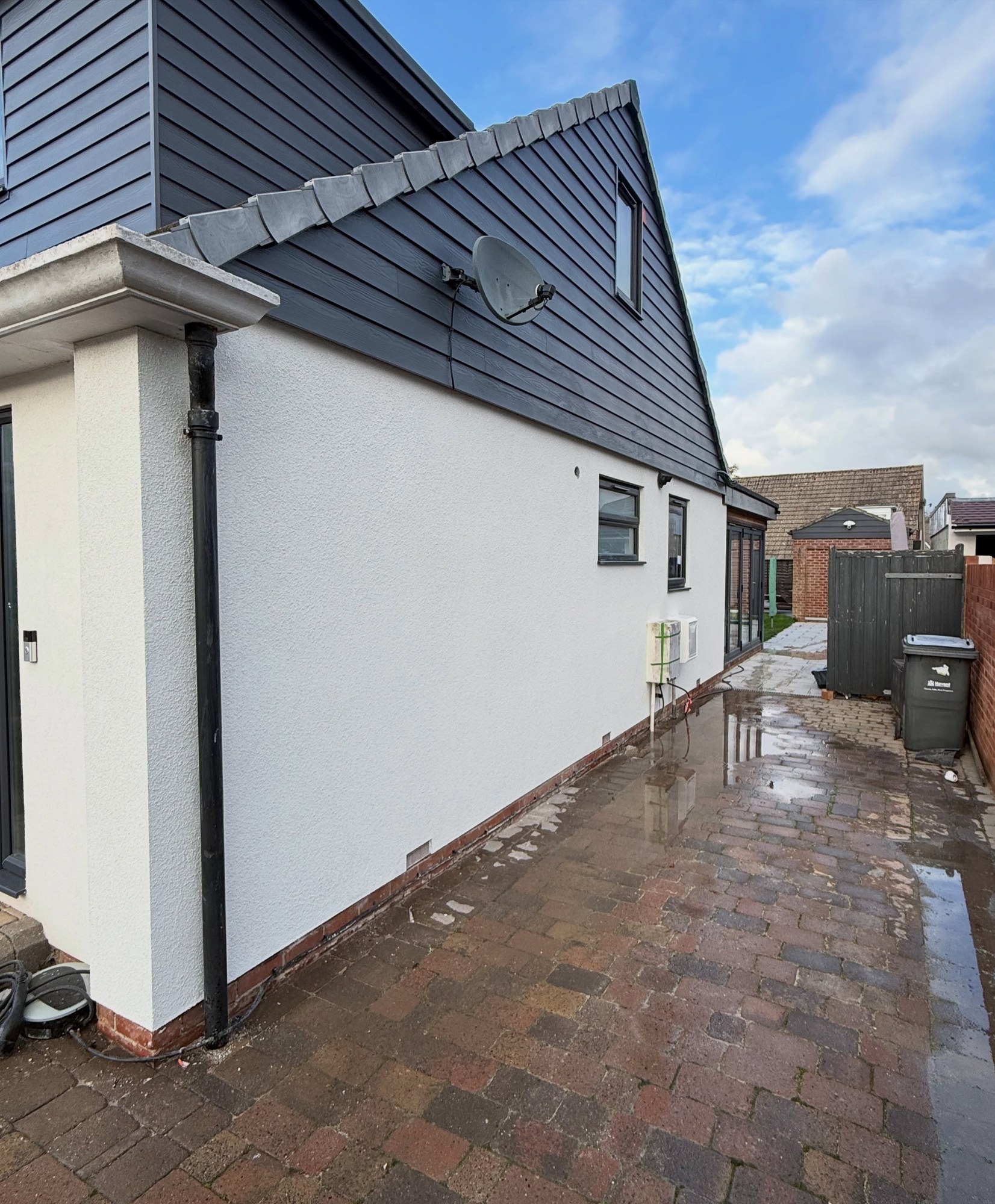
Render protects a wall and gives a building its finished look, so the system has to suit the wall underneath as well as the look you want. We complete all aspects of internal and external rendering for homes and commercial properties across Worthing and West Sussex, from traditional sand and cement to modern through-coloured and silicone finishes.
The renders we apply
Sand and cement render. The traditional choice for masonry walls. It is hard-wearing, can be finished smooth or textured, and is normally painted once it has cured. Inside, sand and cement is also used as a backing on walls that need building up before a plaster finish.
Lime render. Lime is softer and more breathable than cement, which makes it a better match for many older, solid-walled buildings, where moisture needs to escape rather than be trapped behind a hard coating. Lime also has its place in details on new work: on our Aldwick Bay new build, the log burner openings were finished in lime render.
K Rend and monocouche renders. These are through-coloured renders, so the colour runs right through the material instead of being painted on. They are usually applied in fewer coats than traditional render and give a clean, contemporary finish that does not need repainting.
Silicone render. Silicone render systems give a thin, modern finish with good resistance to the weather, in a wide range of colours. Recent jobs include a house in Saltdean, where a reconfiguration and extension project was finished externally with a silicone render system in the colour Prosecco, and a property in Waterlooville finished in the colour Platinum.
Pebble dash. Pebble dash is still the finish on a great many British homes. It can be applied new, or patched where an existing finish has been damaged.
Getting the background right
Most render problems start underneath. Before any render goes on, the wall needs to be sound, clean and suitable for the system: loose or hollow render hacked off, cracks dealt with, and beads fitted to corners, window reveals and the base of the wall so the edges are crisp and protected. Brick, block, old render and insulation boards each call for different preparation and basecoats, and choosing the right combination matters as much as the finish coat itself.
A render that is too hard for the wall behind it, or applied over a background that is still moving, will crack. A render taken down to the ground, or over the damp proof course, can draw water into the wall. Those are the details we look at before quoting, because they decide how long the finish lasts.
Internal rendering
Rendering is not only for outside walls. Inside, render is used on solid walls that need building up, around fireplaces and chimney breasts, in cellars, and as part of damp proofing, where a waterproof render or tanking system stops moisture coming through. On the Bosham project described on our projects page, the work included waterproof render to the natural swimming pool. If damp is the reason for the work, our damp proofing page explains how we approach it.
Weather and timing
Render is a wet trade, and the weather matters. Most renders should not be applied in frost, heavy rain or strong direct sun, because the material needs to cure at a steady rate. External work is planned around the forecast so that each coat has the best chance of curing evenly, and scaffolding and protection go up before the first coat.
Talk to us about your render
Whether it is a whole house, an extension that needs to sit well with the original, or a damaged section of existing render, we can look at the wall and advise on the right system. Quotes and advice are free and without obligation: call 07824 165672.