Solid walls and lost heat
Many of Arundel's older homes have no cavity to fill. The Sussex Extensive Urban Survey records flint as the main building material of the early 19th century, used with brick dressings in the town's many terraced cottages, and brick as the dominant material of the 18th-century houses before that. Solid walls like these lose heat faster than a modern cavity wall, which is why insulating them from the outside is worth considering. The difficulty is that the outside is exactly what gives the old town its character.
Board systems on 20th-century houses
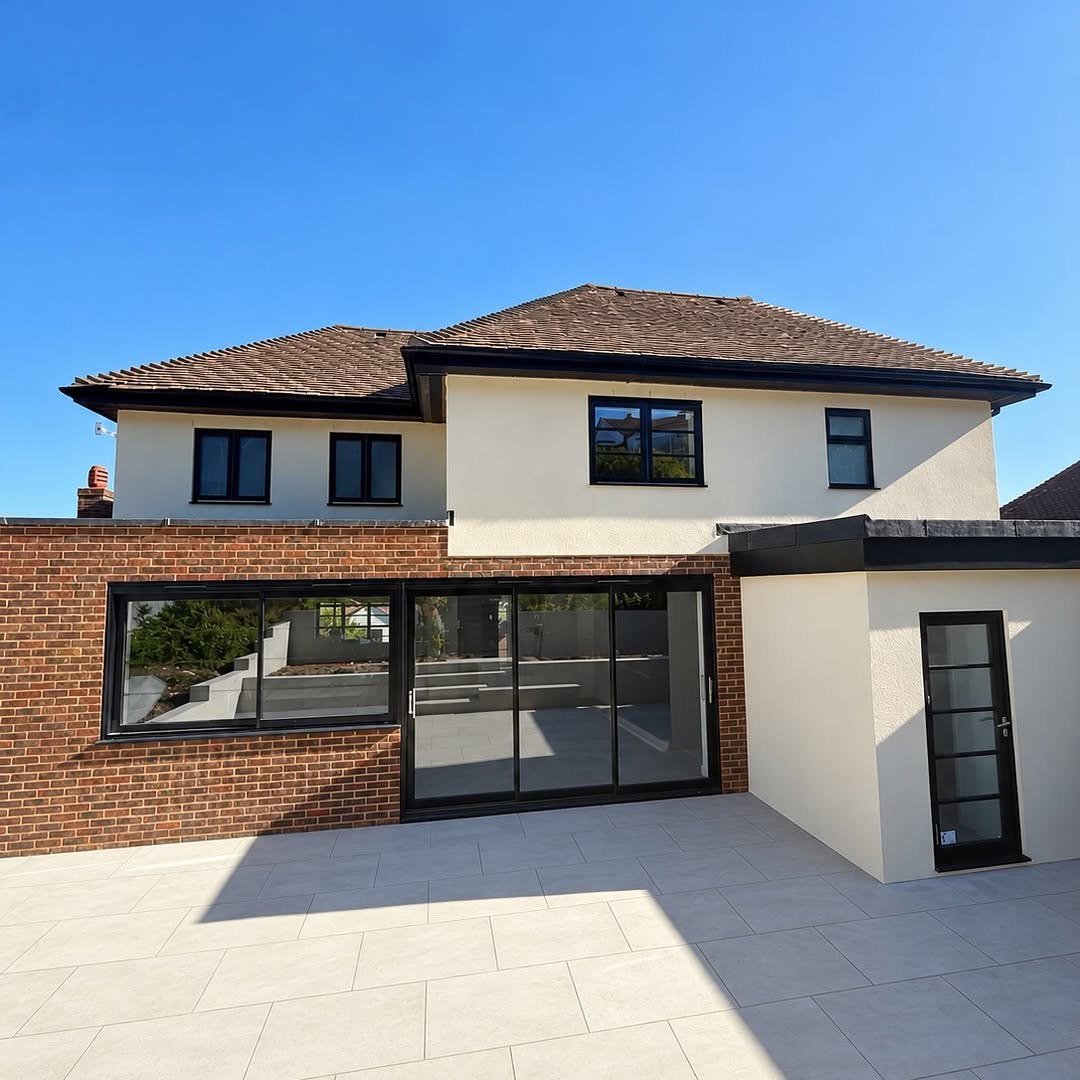
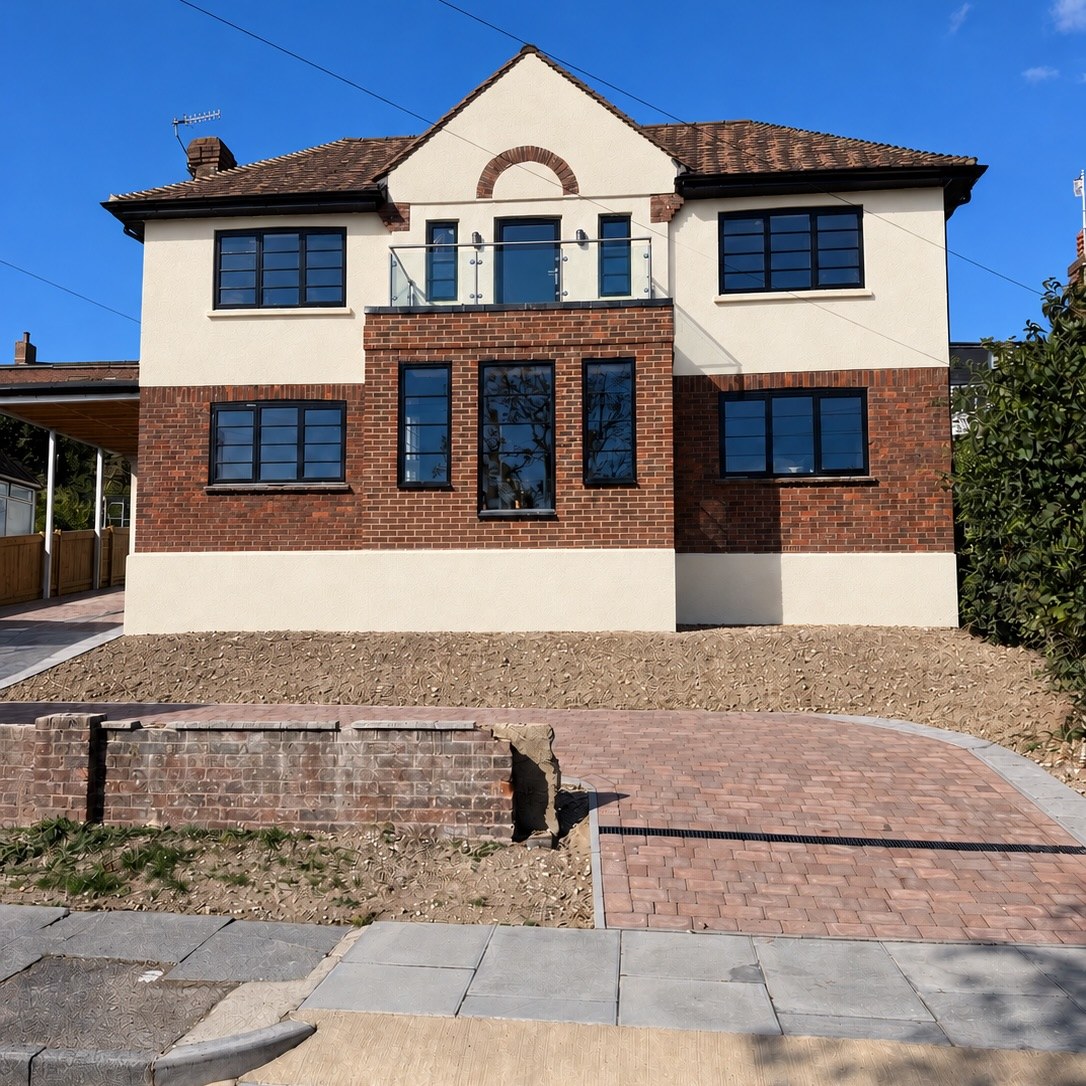
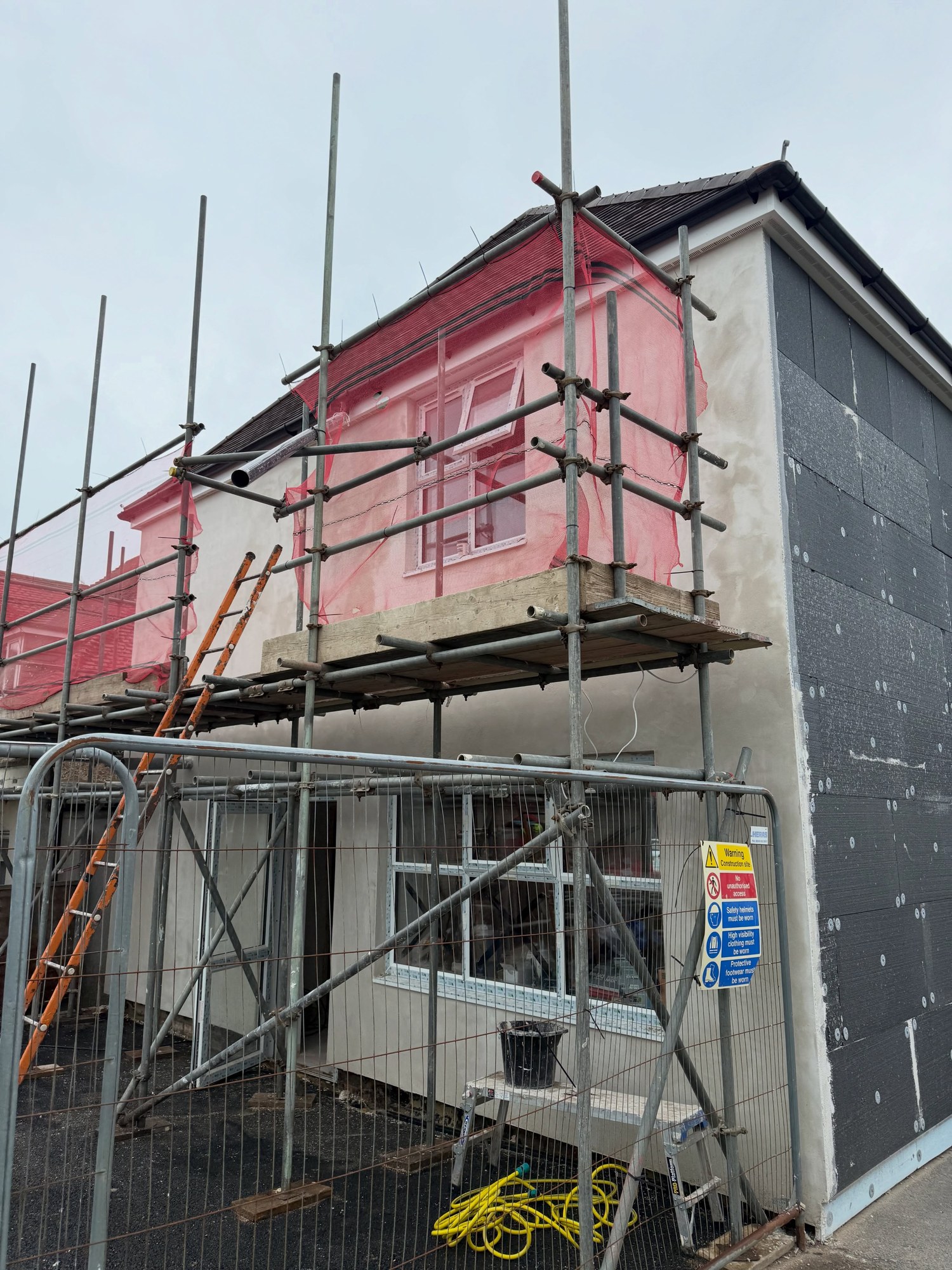
The semi-detached and detached houses that make up much of Arundel west of the A27 are the more straightforward candidates. An external wall insulation system starts with a level starter track at the base of the wall. Insulation boards, EPS among other types, are bonded on and mechanically fixed with staggered joints, then covered with a basecoat and reinforcing mesh, beads at corners and openings, and a render finish. A through-coloured top coat is common, and our page on silicone render in Arundel explains that finish.
The wall gets noticeably thicker, so the details need working out before anything is ordered: window sills may need extending, eaves and verges adjusting, and gas meters, vents, downpipes and outside lights all have to come off and go back on. On a semi-detached pair, the line where your insulated wall meets your neighbour's uninsulated one needs a neat, weatherproof stop.
Cork render for older flint and brick
Where a full board system would be too thick, or would hide the character of an older house, cork render is a gentler option. It goes on as a thicker coat than ordinary render, using cork granules that are naturally insulating and breathable, so the wall can still release moisture. That suits solid flint and brick, which need to dry out rather than be sealed in. It adds less insulation than boards, but it keeps window reveals and eaves closer to their original proportions.
Permission comes first in Arundel
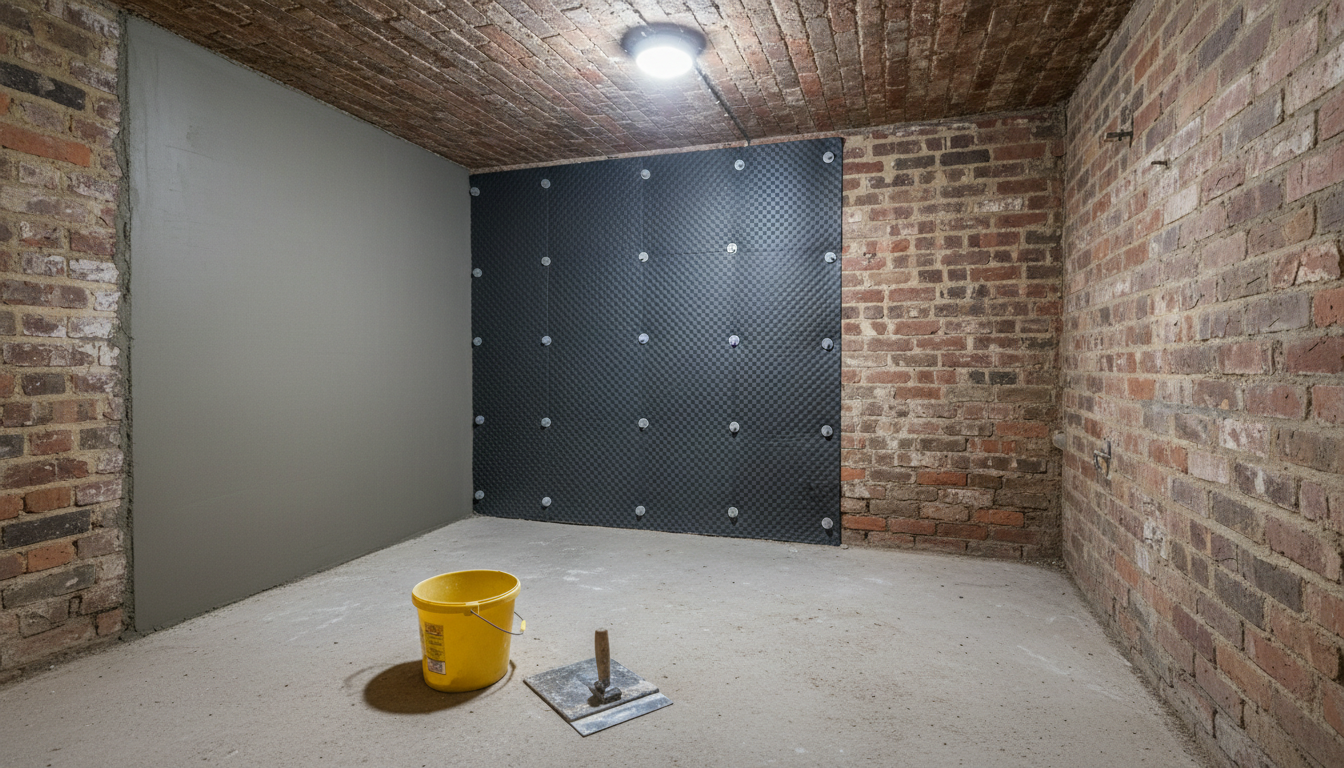
Insulating and re-rendering external walls can need Building Regulations approval. In a conservation area or on a listed building it can also need planning permission or listed building consent, because it changes how the building looks. Arun District Council restricts permitted development rights in its conservation areas, so check with the council before committing, using its interactive map to see if your house is inside the boundary. A common compromise on older terraces is to insulate the rear elevation from outside and line the front rooms from inside, leaving the street face as it is; our page on dry lining and insulation in Arundel covers the internal side.
Before you go ahead
- Fix any damp first, because insulation will not cure it and can hide it.
- Check the condition of the existing render or brickwork, since loose material has to come off.
- Think about scaffold access, particularly on the steep upper part of the High Street.
- Plan the colour and texture of the finish with the neighbours in mind.
Read more about external wall insulation and cork render, or visit our Arundel page for every service we cover in the town. Call 07824 165672 for free, no-obligation advice.