A town made of brick
Hove's coastal plain held rich deposits of brickearth, and by about 1770 a brickfield was working on the land that later became Brunswick Square. Other brickfields followed further west until housing pushed them out, and a large deposit still lies under Aldrington. The bricks themselves vary by district. William Willett's houses around All Saints Church, built in the 1870s and 1880s, are in pale gault brick, as are the big villas he put up along The Drive. The late 19th-century semi-detached and terraced houses of Old Hove, around the ancient Hove Street, are mostly red brick. Around Hove station, pale yellow, buff and brown brick predominates. Each of those bricks takes up water at a different speed, which affects how the backing coat is mixed and applied.
Willett-built and Old Hove houses
Willett's houses were regarded as solidly built and well proportioned. In houses like these, the usual reasons for floating them are alterations: a doorway moved when a villa was split into flats, a chimney breast removed, or old plaster hacked off after a leak. The opened sections are floated to line up with the original plaster either side, then the whole wall is set so the repair cannot be seen. In the larger rooms, long walls are ruled off in bays so they stay flat across their full length, and the floating is kept to a depth that lets skirtings, architraves and any surviving cornice sit back in their original positions. Getting that right is what stops a repaired villa wall looking patched once the room is decorated.
Flint in Portslade Old Village and Hangleton
Older still are the flint walls of Portslade Old Village, with its small flint-walled cottages and long runs of flint walling around St Nicolas' Church, and Hangleton Manor, the 16th-century flint house that is Hove's oldest secular building. Flint gives a trowel very little to grip and leaves deep, irregular hollows. Those are dubbed out in several thin layers, each allowed to firm up, before the floating coat is ruled flat and keyed for the finish. On an old solid wall the choice of backing material matters, and we agree it with you before any plaster goes on.
New blockwork on extensions
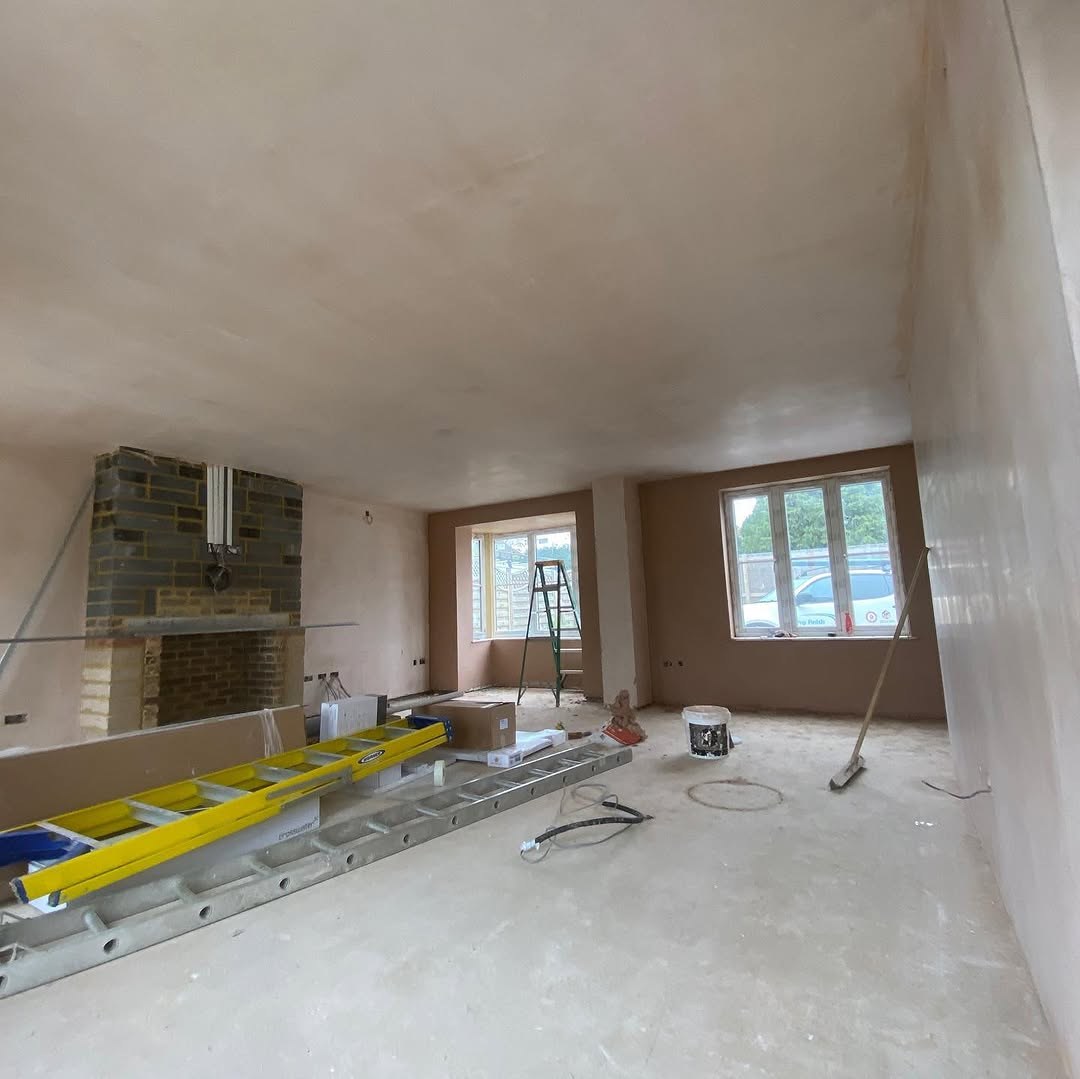
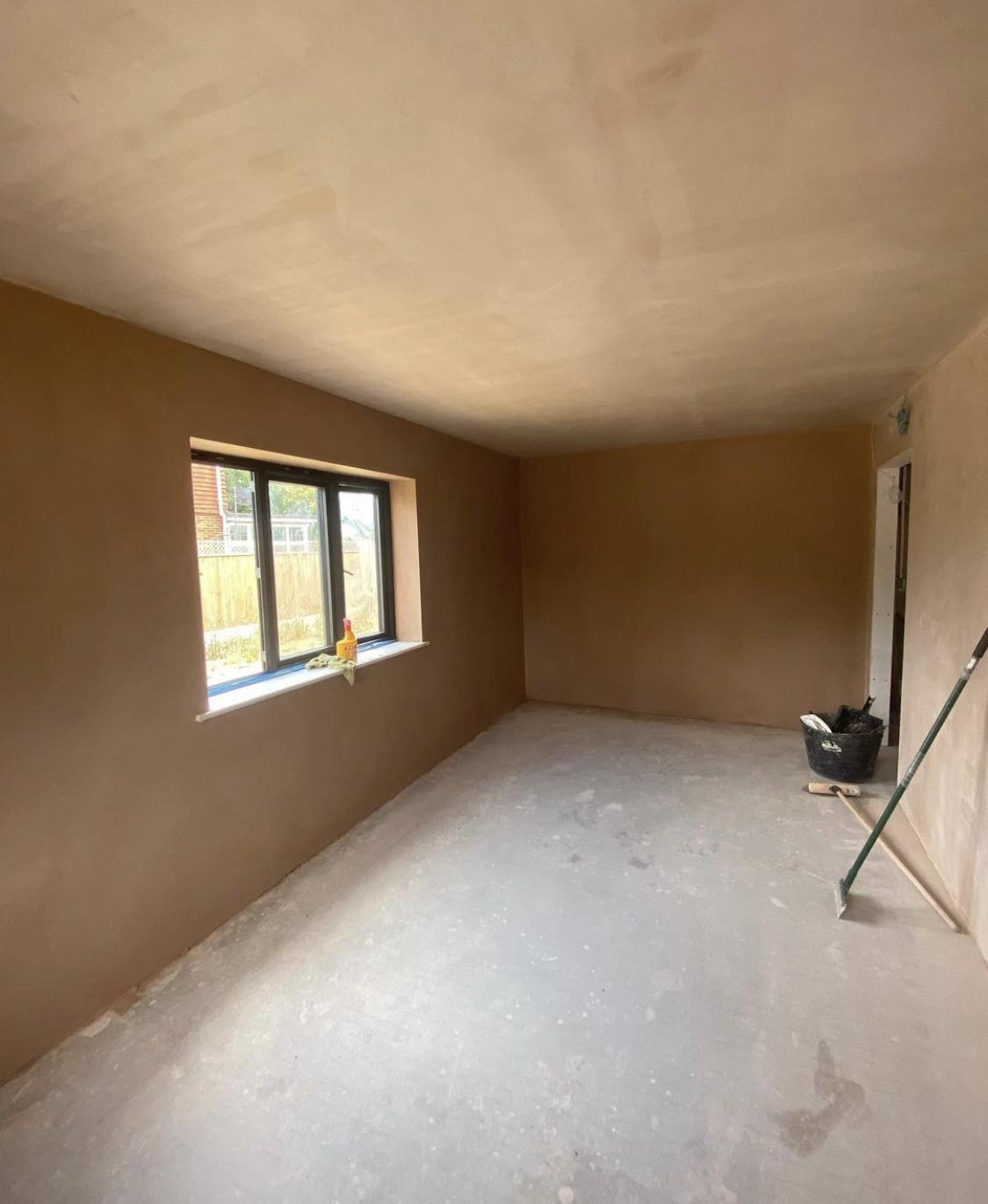
Rear extensions and new internal walls in blockwork are floated and set for a hard, solid finish that copes with wall cupboards and everyday knocks. Plasterboard is the quicker alternative and suits some rooms better; our page on plasterboarding and dry lining in Hove compares the two. Where new blockwork meets an old brick wall, the junction is reinforced so it does not crack along the line.
Before the plaster comes off
- If damp brought the old plaster down, deal with the cause first: see damp proofing in Hove.
- Many Hove houses sit in conservation areas or are listed, so check before removing original plaster from a listed interior.
- Allow drying time: a floated wall can hold water for weeks.
Pro Finish Plastering covers all of Hove and Portslade. Our main float and set plastering page explains the method in more detail. Call 07824 165672 for a free quote with no obligation.