Low ground by the river and the sea
Littlehampton is a low-lying town. The Sussex Extensive Urban Survey puts the historic core at around 2.7 to 3.7 metres above Ordnance Datum, Beach Town slightly higher, later parts of South Terrace as low as 2.1 metres, and parts of the suburbs north of the old centre below 3 metres. Beneath them lie raised beach deposits, the sands, silts and clays known as brickearth, and the clays, sands and gravels of the old tidal flats of the Arun.
The river is tidal here. Between 2013 and 2015 the Environment Agency raised the flood defences along the east bank of the Arun, from the lighthouse on the Promenade through the town centre to north of the A259. Those works deal with tidal flooding; they do not change the ground moisture that older walls sit in every day, which is where most household damp begins.
Working out what kind of damp it is
Damp in a Littlehampton house usually has one of three sources. Moisture rising from the ground leaves a tide line low on the wall, crumbling plaster and white salts. Water coming in sideways through cracked render, failed pointing or a leaking gutter shows as patches that worsen after rain, often on the side of the house facing the weather. Condensation shows as black mould in corners, on window reveals and behind furniture, and is common in flats and in homes with cold solid walls. We find the source before suggesting a remedy, because the wrong treatment leaves the real problem in place. With condensation, small habits matter: an extractor that runs long enough to clear the steam, trickle vents left open, and furniture pulled a little away from cold outside walls all make a noticeable difference.
Basements, flint and old walls
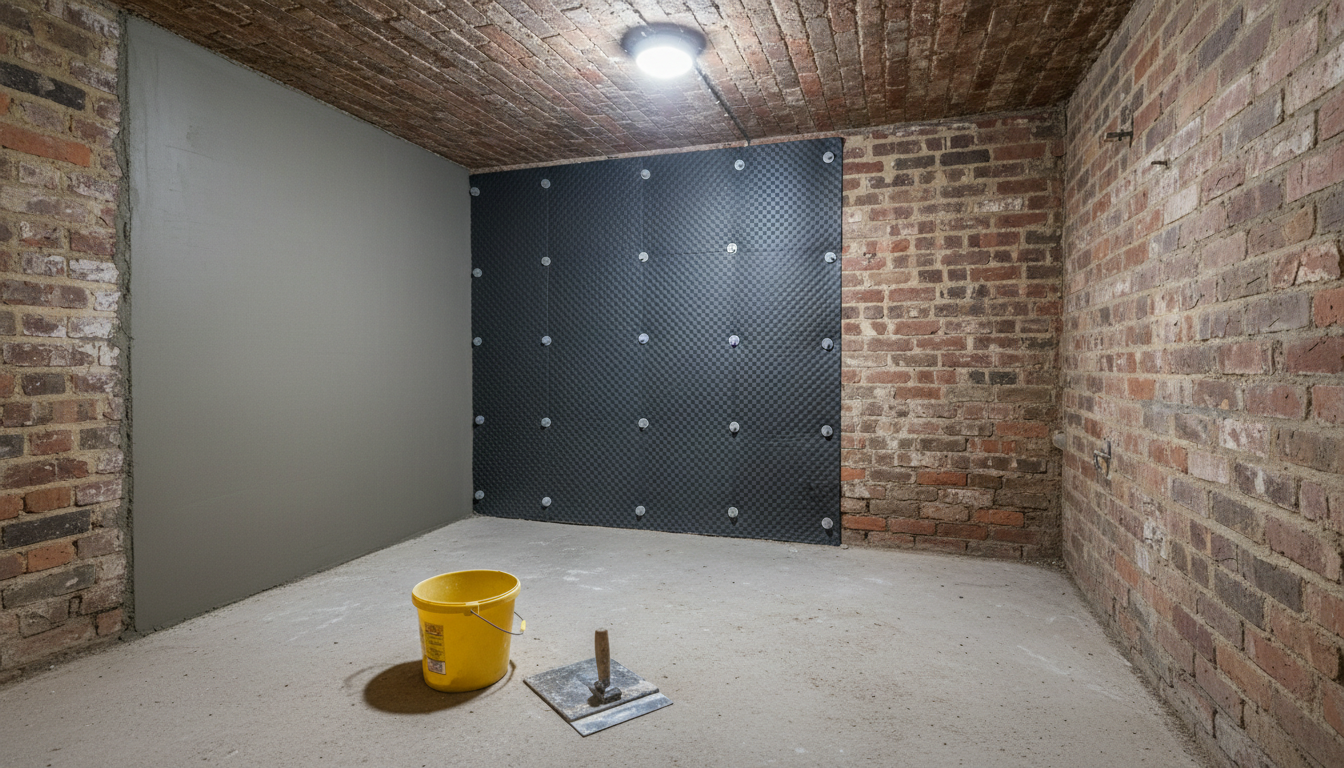
Beach Town's late eighteenth and early nineteenth-century terraces were built three and four storeys high over basements. A room below ground can never dry out from the outside, so a basement that is going to be used needs tanking: a waterproof render or coating on the inside face, or a studded cavity drain membrane that lets water behind it run away while the room stays dry. The finished wall can then be plastered or dry lined.
Older solid-walled houses, such as the flint cobble cottages in Western Road, often have no damp proof course at all, or one that has failed or been bridged by raised paths and render taken down to the ground. Where a new damp course is the right answer, it is injected into the mortar at the base of the wall and the salt-laden plaster above is replaced. On walls like these the new plaster and render must let the wall breathe; see float and set in Littlehampton and rendering in Littlehampton for how we put them back.
Before you call
Note where the damp appears, whether it gets worse after rain or in cold weather, and anything that has changed outside, such as a new patio, path or flower bed against the wall. Photos of the affected areas and the outside of the same wall help a great deal. Read more about our damp proofing and mould prevention work, or see all our services in Littlehampton. Call 07824 165672 for free, no-obligation advice.