Low ground, high water tables
Damp in Bognor Regis often starts with the ground the town is built on. West Sussex County Council's historic survey of Bognor describes the old town centre and South Bersted sitting on brickearth, a mix of sands, silts and clays, with tidal flat deposits on the east side marking the former marshy estuary of the Aldingbourne Rife. Arun District Council says surface water flooding affects a large proportion of the district, and that the Aldingbourne and Lidsey rife catchments have long-standing drainage problems.
That has shown up in recent years. A county council flood investigation published in 2025 found that October 2023 was the wettest October on record, that groundwater and river levels on the Aldingbourne Rife were already very high when Storm Ciarán arrived, and that homes and roads were affected in Aldwick, Bersted, Elmer, Felpham, Middleton-on-Sea, Pagham and Rose Green. The same report notes that around 367 properties across Bognor Regis were affected in the June 2012 flood. When the ground stays saturated for weeks, the bottom of a wall stays wet for weeks too.
Telling the three kinds of damp apart
Before anything is injected, tanked or replastered, Pro Finish works out where the moisture is coming from:
- Rising damp shows as a tide mark low on the wall, salts blooming on the surface and plaster that crumbles at skirting height. In older houses the damp proof course is often bridged by a raised path, a flower bed or render carried down to the ground.
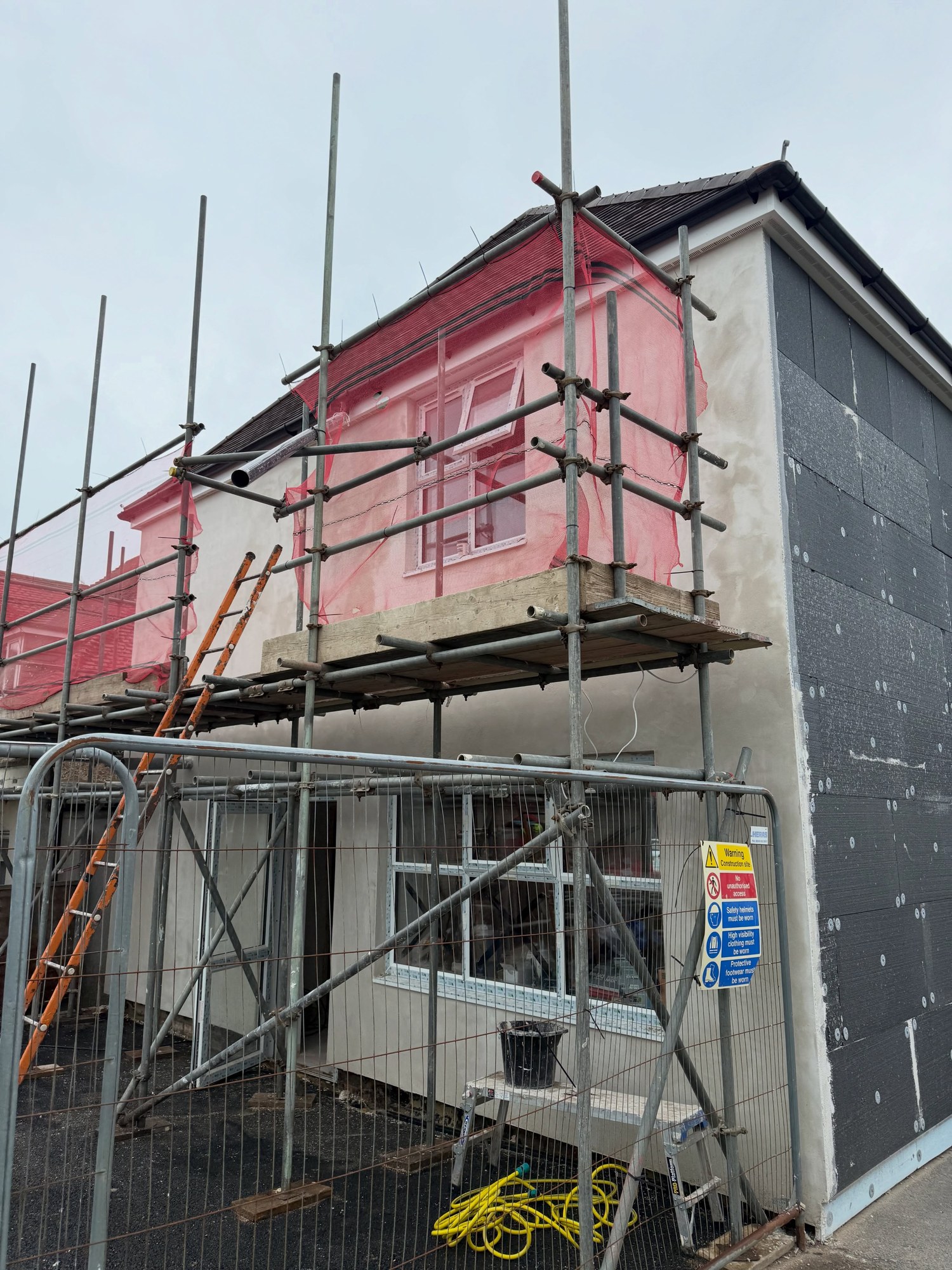
- Penetrating damp appears at any height and gets worse after rain. On this coast, wind-driven rain through cracked render, failed pointing or a leaking gutter is a common cause; the fix starts on the outside, with rendering in Bognor Regis if the render has failed.
- Condensation leaves black mould on cold surfaces: window reveals, the corners of rooms, behind wardrobes. It is common in flats and in solid-walled homes in winter.
Treating the walls
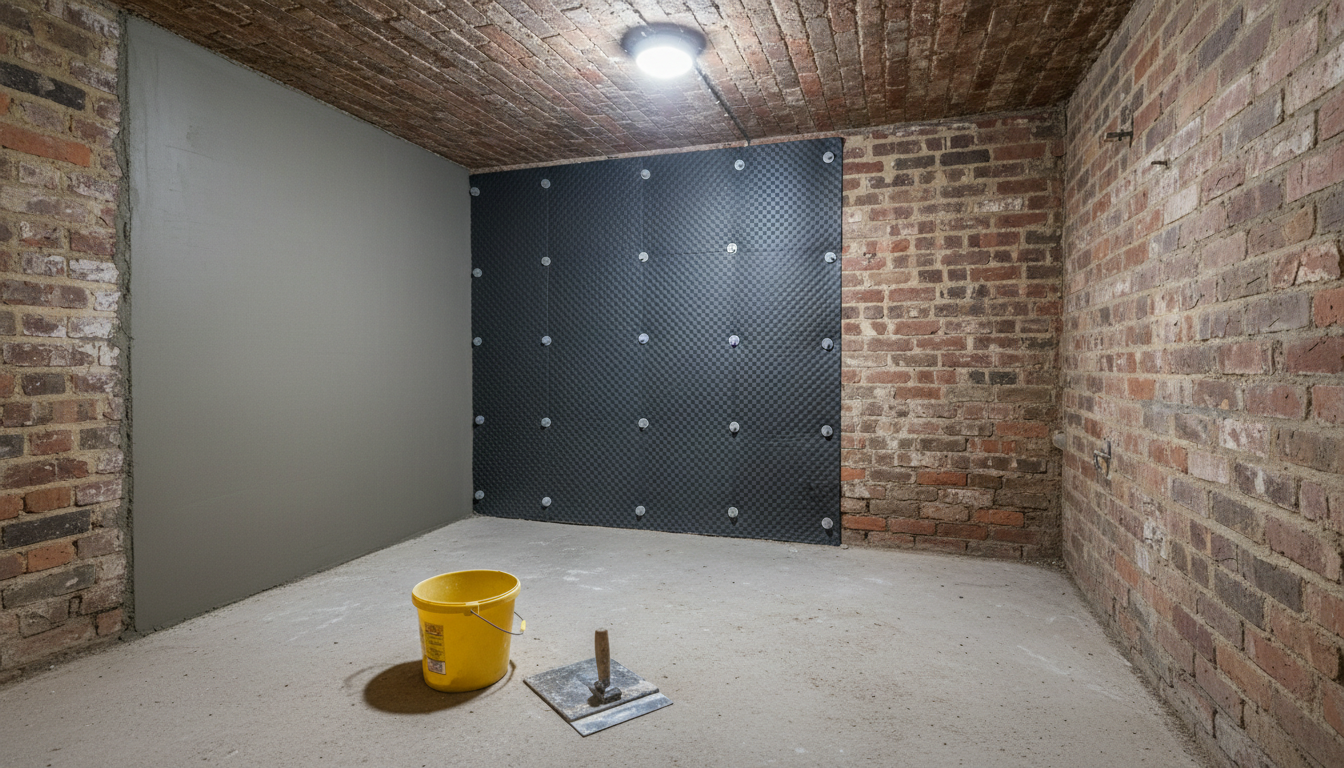
Once the cause is clear, the treatment follows. A damp course injection puts a water-repellent barrier into the mortar at the base of the wall. Below-ground rooms and walls that hold back earth need tanking, either a waterproof render or a cavity drain membrane that collects water and lets the room stay dry. Mould is cleaned off and ventilation improved, sometimes with insulation or dry lining where a cold wall is to blame. Older flint and rubble walls, such as the eighteenth-century cottages in South Bersted, need breathable materials, because sealing them in hard cement can push the moisture somewhere worse.
Putting the walls back after flooding or damp
Gypsum plaster that has been soaked, and plaster loaded with salts from rising damp, keeps drawing moisture and has to come off. The bare masonry is then left to dry before being floated and set with materials suited to a wall that has been wet; see float and set plastering in Bognor Regis. Rushing this step is a common reason for a repair failing within a year.
Before you call
Note when the damp appears, after rain, in cold weather, or all year. Check gutters and downpipes, and look at the ground level outside against the inside floor. If your property flooded in 2012 or 2023, mention it. Photos of the affected walls, inside and out, help us give useful advice before visiting.
There is more on our methods on the damp proofing and mould prevention page, and everything else we do in the town is listed on the Bognor Regis page. Free, no-obligation advice on 07824 165672.