Water under and around the village
Angmering has a long history with water. The Angmering Neighbourhood Plan explains that the Black Ditch, known locally by some as the Patching Stream, runs from Patching Pond through the village centre and the Ham Manor estate before winding west to the River Arun. Until the mid-19th century it fed a pond where The Green is now, and a rowing boat was sometimes needed to cross The Square in a flood. The stream was then culverted under the centre, but the plan records that every few years, after heavy rain, The Square can still become a lake, flooding houses in Water Lane. It names June 2012 as the most recent major flood and calls Angmering one of the top ten wet spots in West Sussex.
The geology adds to it. The plan describes the main residential area as at medium to high risk of flooding from rainfall running off the land, and identifies it as a groundwater emergence zone. Arun's conservation area appraisal notes that Station Road and the southern end of Water Lane lie at only about 5 to 5.4 metres above Ordnance Datum, along the base of a shallow valley, and the plan lists Station Road, Cow Lane and Ecclesden Lane among the places that regularly flood after heavy rain.
What that means for your walls
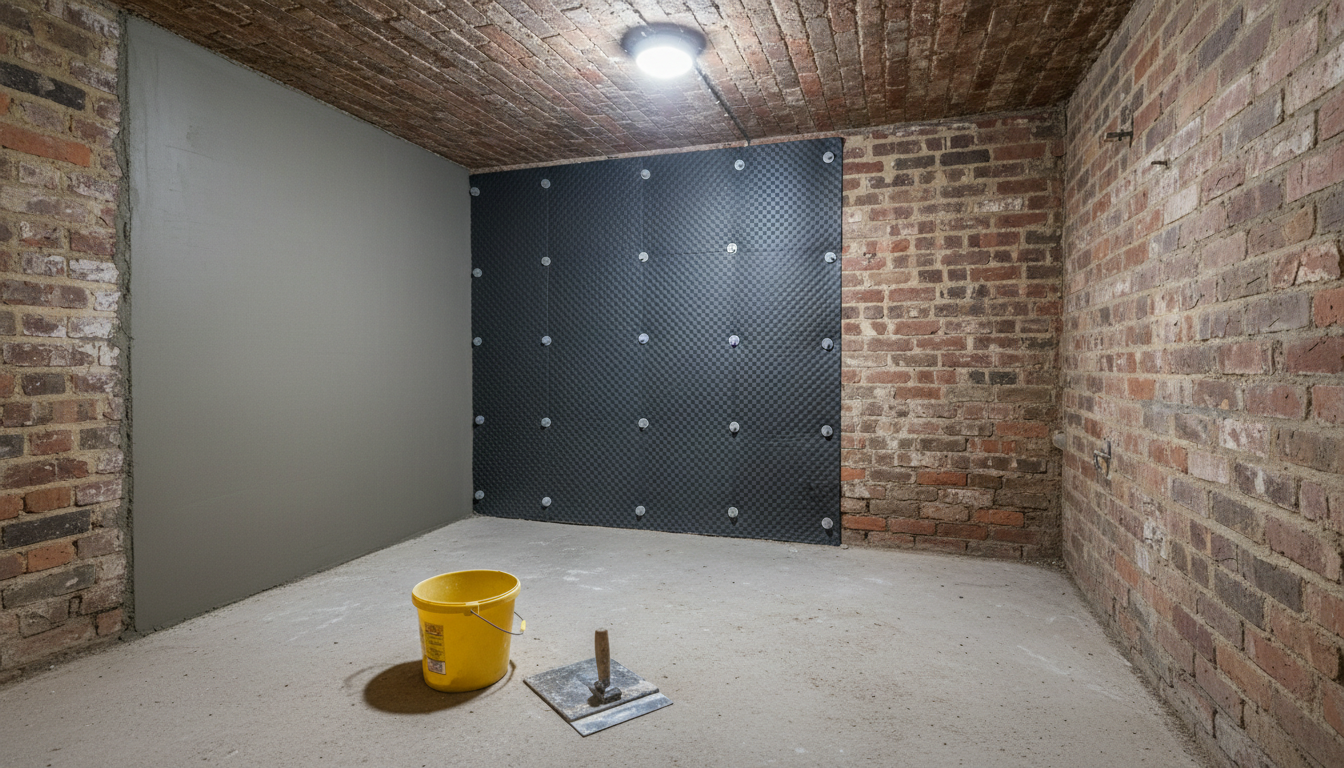
After a flood, or after years of high groundwater, walls hold water deep in the masonry and carry salts that keep drawing moisture back. Simply repainting rarely lasts. The wet, salty plaster has to come off, the wall has to dry, and it is then re-plastered with a system suited to a wall that has been wet. Where a room is set into rising ground, as can happen on the steeper parts of the High Street and its side roads, the buried wall can never dry from outside and needs tanking: a waterproof render or a cavity drain membrane that lets water drain away behind a dry inner face.
Older flint and brick houses
The village's historic houses, many faced in flint with red brick dressings, were built with solid walls that manage moisture by letting it evaporate. A hard cement render, impermeable paint or soil heaped against the wall can trap it. On walls like these, the right answer is often better drainage and a breathable finish rather than a chemical injection. Damp course injections have their place where a barrier has failed in a brick wall, and we install them where they are the right fix. For walls that have been taken back to brick, see float and set plastering in Angmering.
Condensation in modern homes
Not every damp patch comes from outside. Black mould on window reveals, in bedroom corners or behind wardrobes is usually condensation, common in well-sealed modern homes and in rooms with cold outside walls. Extractor fans, trickle vents, steady background heat and drying clothes outside where possible all help, and we remove mould and improve ventilation. If outside walls are letting water in through cracked render, rendering in Angmering covers the repair. See our main damp proofing and mould prevention service for more, or the Angmering page for our other work. Call 07824 165672 for free, no-obligation advice.