Where it fits in Angmering
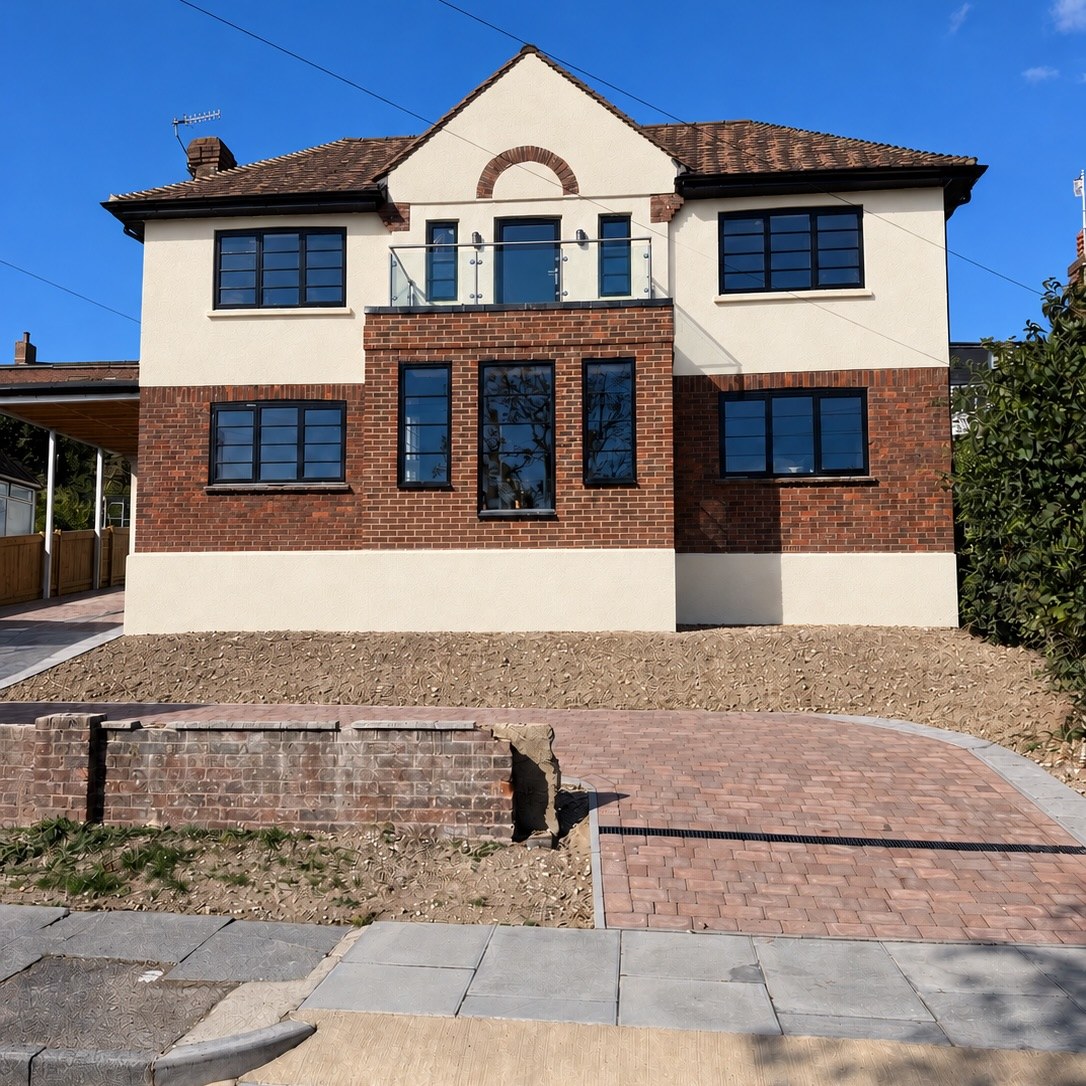
The About Angmering guide from the parish council describes the village as a century of low to medium density housing, and the Angmering Neighbourhood Plan breaks it into character areas. Many of those homes are good candidates for silicone render: the 1960s and 1970s houses and bungalows of North and South Angmering, the large detached houses of Weavers Ring and The Avenals, the low-density roads around Ham Manor developed between the 1930s and 1960s, and the 1930s Garden City style houses on Mill Road and Lansdowne Road. Where a house already has painted render or pebble dash that is cracked, faded or patched, a silicone system can give it one even, coloured finish that never needs painting.
Fields, trees and the foot of the Downs
Angmering is a greener setting than the coast just to the south. The conservation area appraisal describes the village on gently rising ground at the foot of the Ecclesden Hills, with farmland to the north, and it picks out the mature trees along the eastern end of the High Street and in many gardens. Walls in the shade of trees and hedges stay damp for longer, which is why painted render near them so often turns green. A silicone top coat is water repellent, so rain beads and runs off instead of soaking in, and the wall dries faster after each shower. That helps it stay cleaner for longer, though a shaded north wall will still benefit from an occasional gentle wash.
Choosing a colour
Silicone render comes in a very wide range of shades. In the conservation area, the appraisal describes rendered houses in off-white, cream and soft pastel tones; if your house is there, or listed, ask Arun District Council about colour before ordering. In the South Downs National Park, which covers roughly two-thirds of the parish, the National Park Authority deals with planning. Outside those areas the choice is yours, but a sample panel on the wall, viewed in daylight, is far more reliable than a small swatch.
The system, layer by layer
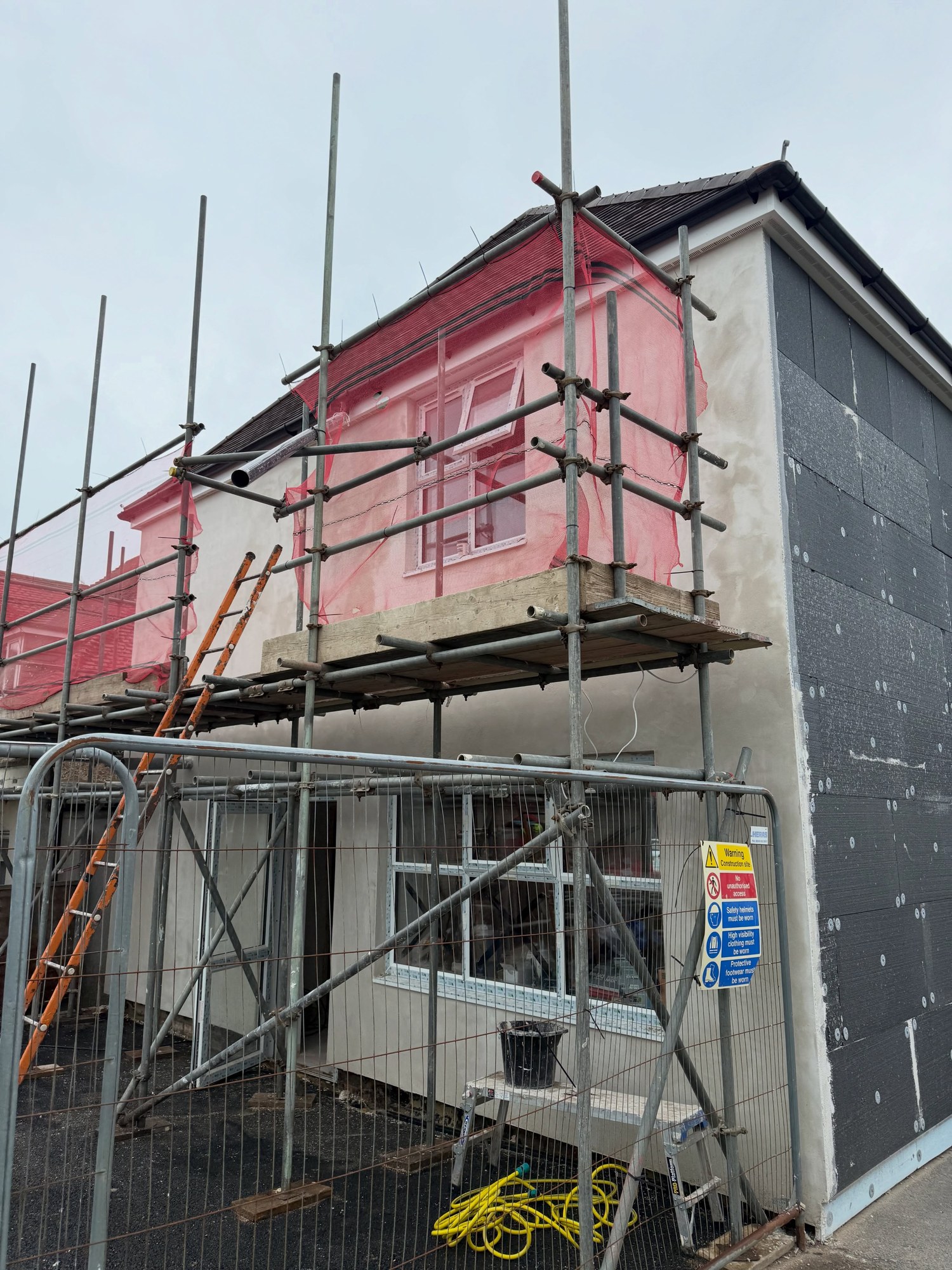
Silicone render is the last coat of a build-up, not a paint. The wall is made sound first: loose render is removed, cracks are cut out and filled, and the surface is cleaned. Beads are fixed at corners, reveals and the bottom edge, which should sit above the damp proof course. A basecoat goes on with reinforcing mesh embedded in it to spread movement and resist cracks. A primer tinted to the finish colour follows, and finally the thin silicone coat is applied and floated to an even texture. Each stage needs dry, frost-free weather, so external work is planned between spring and autumn.
Related work
If you are unsure whether silicone is the right finish, our page on rendering in Angmering compares it with sand and cement, K Rend and monocouche. If you want the walls warmer as well, a silicone coat is the usual finish over external wall insulation in Angmering. More detail is on our silicone rendering service page, and the Angmering page lists everything else we cover. Call 07824 165672 for free, no-obligation advice.