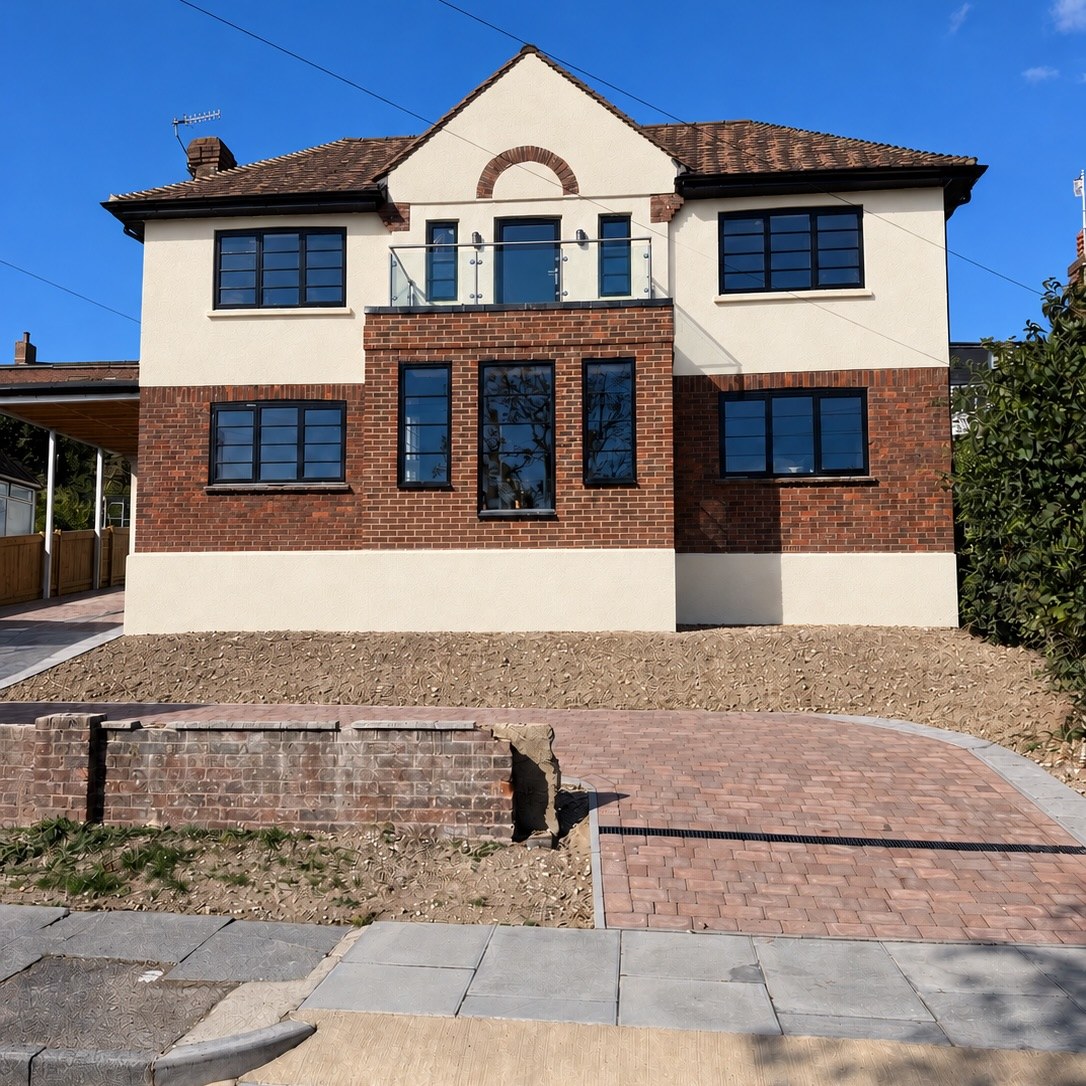
An end to repainting render
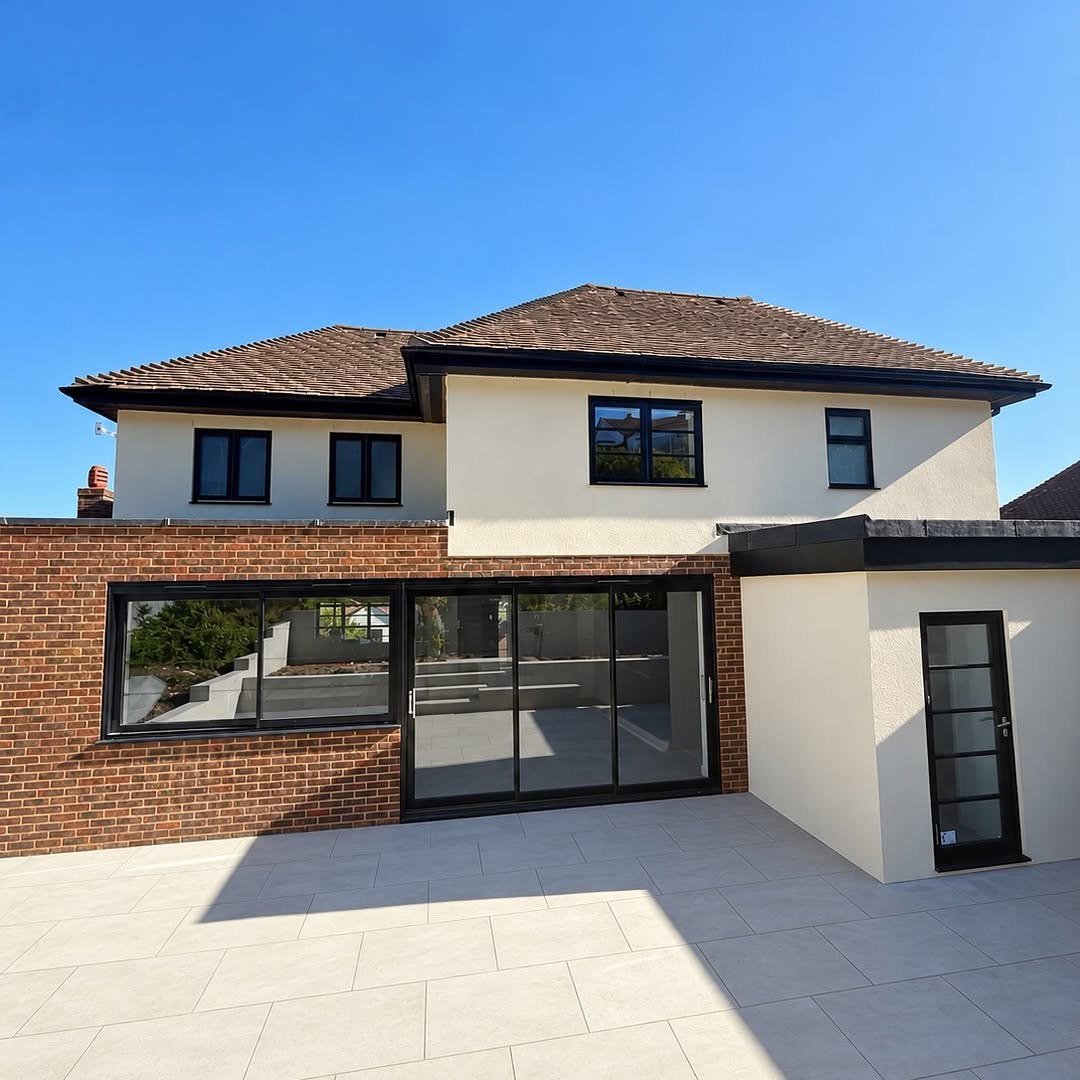
Painted render is common in Hassocks, from the Arts and Crafts council houses of the 1920s on London Road to 1930s homes with a rendered first floor. It looks crisp for a few seasons, then the paint chalks, flakes and streaks under the sills, and the scaffolding has to go up again. Silicone render breaks that cycle. The colour is mixed right through a thin top coat, and the silicone in it makes the surface shed rain while still letting vapour out of the wall behind, so there is nothing to peel and nothing to repaint.
Choosing a colour that suits the village
Colour is the decision that matters most, because it is permanent and Hassocks is a village people see from above. The parish townscape appraisal points out that it is viewed from the South Downs National Park, and even notes that bright red roofs at Clayton Mills stand out in those views. The same document credits soft red brick, brown clay roof tiles and red tile hanging for the village's cohesion, and warns that its period charm is easily eroded when materials and form stop matching. A soft off-white, stone or cream usually sits more comfortably beside those materials than a stark white or a bold shade. It is worth looking at samples against your own brick and roof tiles in daylight before choosing.
Over old render, pebble dash or new block
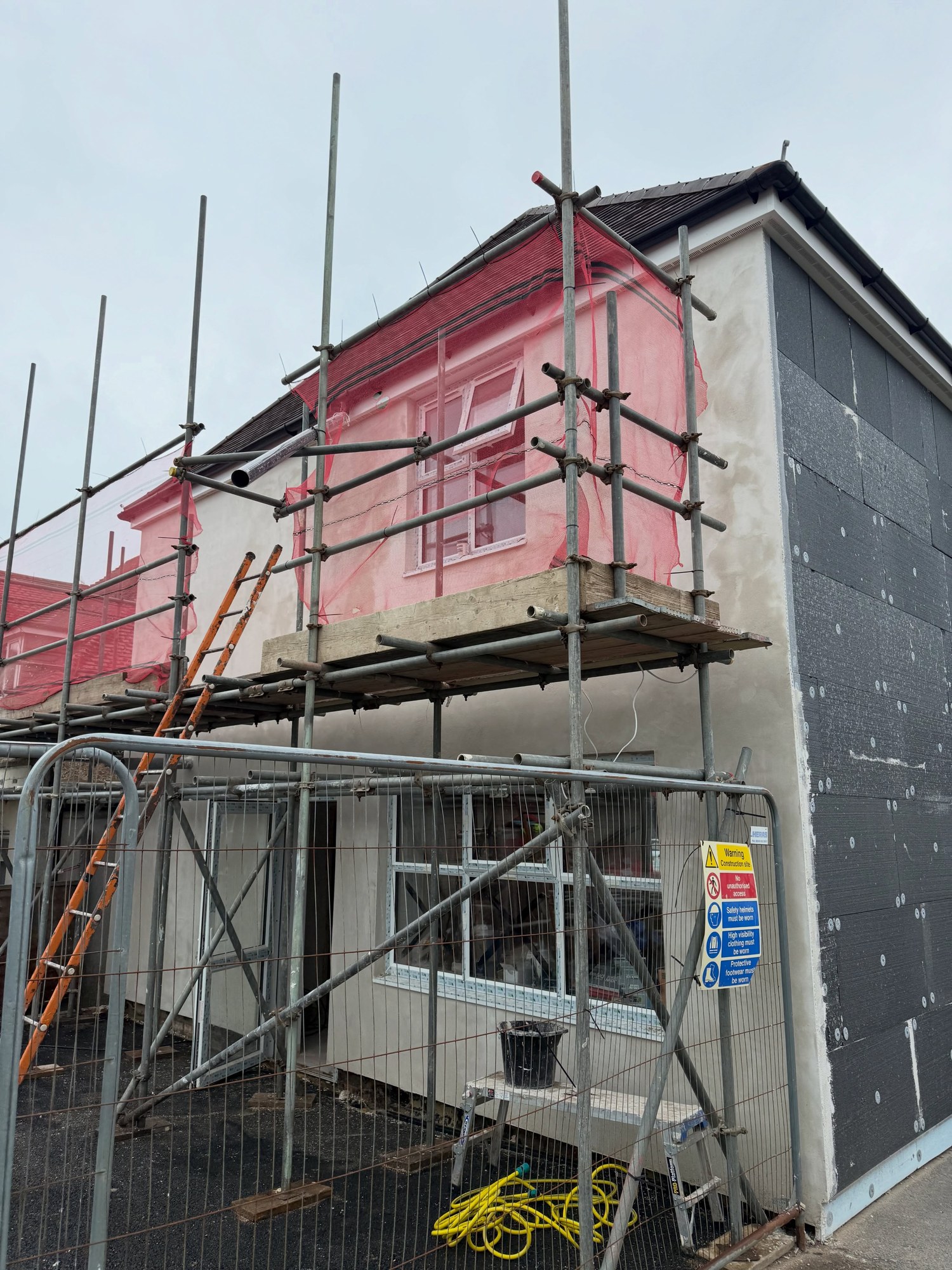
Where an existing render or pebble dash is firm and well bonded, it can usually be prepared and overcoated rather than stripped. A meshed basecoat goes over the prepared surface, followed by a tinted primer and the thin top coat. Hollow or cracked areas are taken off first, because a new system laid over failing render only hides trouble. On new blockwork, such as a side or rear extension, the same build-up goes straight onto the prepared block, which is a neat way of tying an extension to a rendered house so the old and new walls read as one. Window reveals, sills, the base of the wall and any junction with tile hanging are finished with the right beads, so the new coat stops cleanly and the edges stay protected.
Shade, trees and staying clean
Hassocks is a leafy place. The appraisal highlights groups of old pines along the Greensand ridge, cherry trees on the wide verges of the Home Estate and Dale Avenue, and well-wooded banks around Stonepound. North-facing walls and walls under trees stay damp longer after rain, and that is where green staining shows first on painted render. A silicone top coat repels water, so the surface dries faster and algae has less to work with. It will not stop a wall under a dripping tree from ever marking, but a light wash now and then normally brings it back.
Booking around the weather
Silicone systems have temperature and weather limits, so they go on in dry, mild conditions and are protected while they cure, which puts most outside work between spring and autumn. Our main silicone rendering page explains the system in full, rendering in Hassocks covers traditional and lime renders for older walls, and external wall insulation in Hassocks explains adding insulation under a silicone finish. Everything else is on our Hassocks area page.