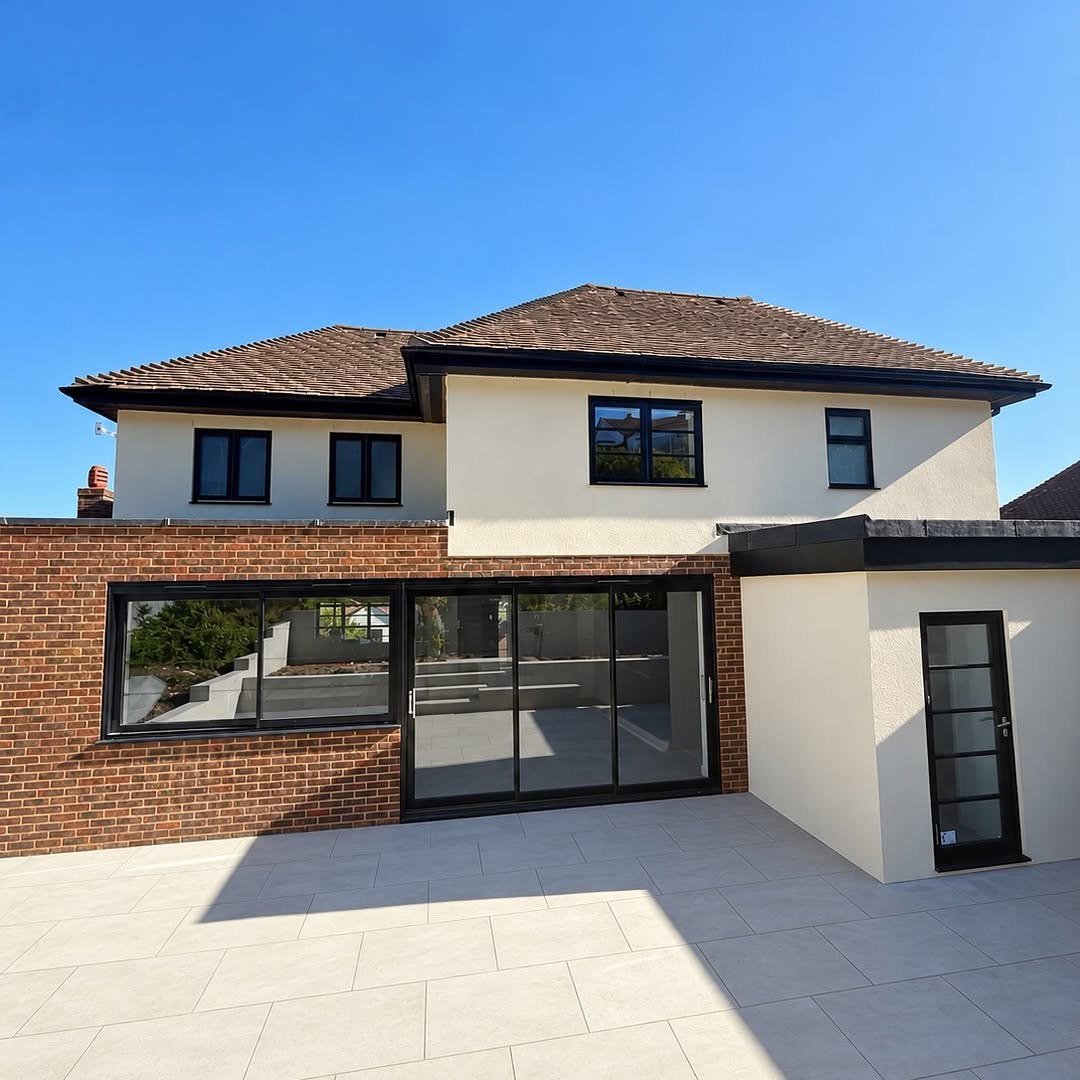
Render is part of East Preston's look
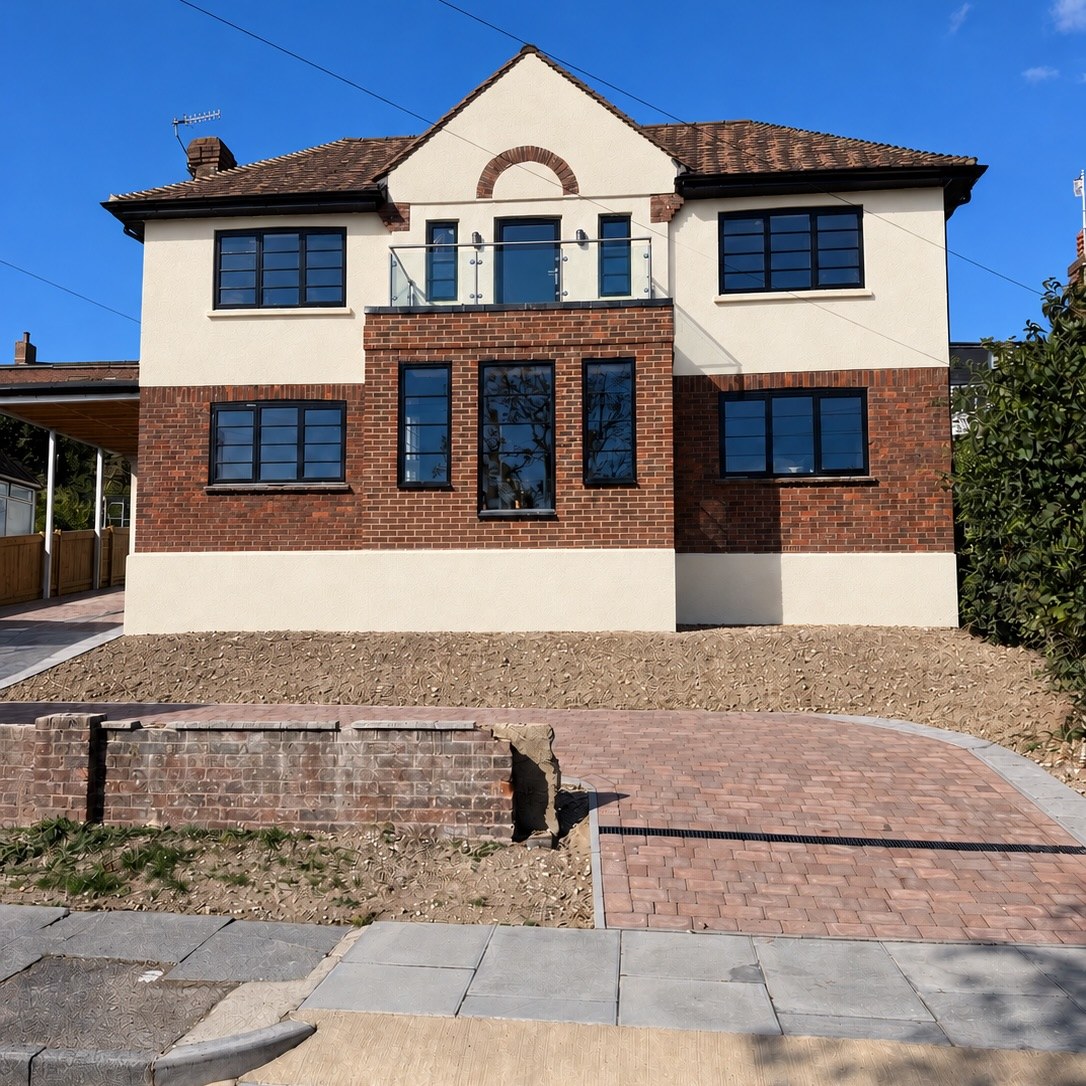
Rendered walls run right through East Preston's history. The village design statement records that the Coastguard Cottages in South Strand, built after a coastguard station was set up around 1820, had flint or rendered walls and mostly slate roofs, and Arun District Council's area of special character describes the eight cottages there as rendered, with slate roofs and lead-covered porches. Preston Hall, built in 1838, has stuccoed walls. When the Angmering-on-Sea estate was laid out as a garden estate from 1913, its houses had rendered or half-timbered walls under tiled roofs, and most of the large pre-war houses on the Willowhayne estate, begun in the 1930s, were rendered or half timbered too.
The design statement lists rendered walls in the Angmering-on-Sea and Willowhayne estates, and in Seafield Road, among the features worth carrying into new work and extensions.
Close to the beach
The two private estates take in the whole foreshore, so the houses nearest the beach face the full weather off the Channel. Render on an exposed, sea-facing elevation wets and dries far more often than on a sheltered wall, and older finishes eventually craze, lose their bond and let water in behind. Repairs there need the right mix for the background, careful beading at corners and at the base of the wall, and enough time to cure before the next band of rain arrives.
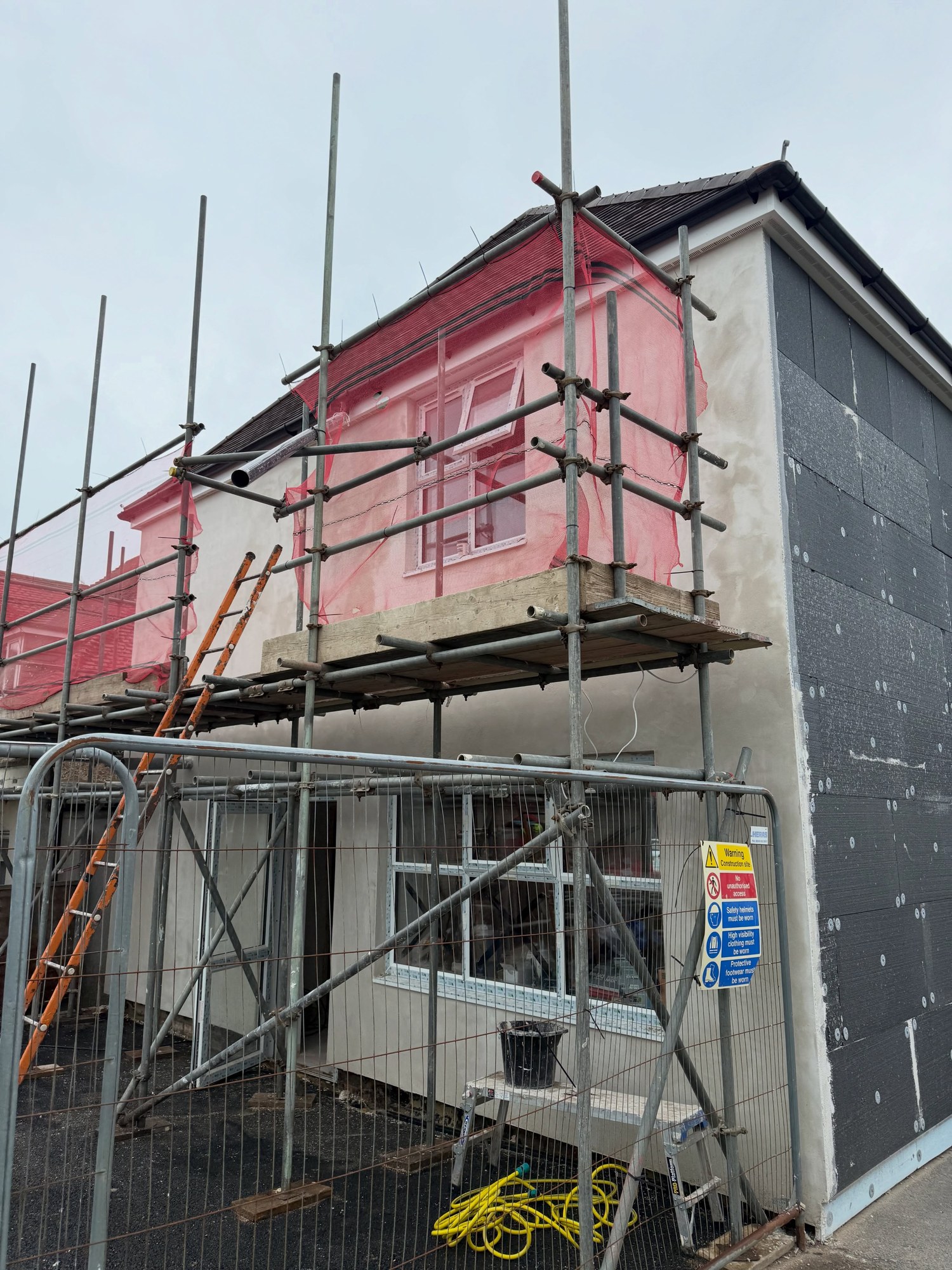
Every job starts with tapping the whole elevation to map the hollow areas, then checking the foot of the wall, where render often runs down past the damp proof course into a path or flower bed and draws water up. Failed sections are cut back to firm edges. New beads, a bell-cast just above the damp course and coats timed to the weather give the repair a clean line and an even cure.
Matching extensions and repairs
The parish wants materials in new and altered buildings to harmonise in colour and texture with those already there, and the design statement even illustrates an extension that looks out of place partly because it was finished in painted render beside the original brickwork. So the starting point for any extension is the existing house. On a rendered house, the new render's texture and colour should follow the old; on a brick house, render may not be the right answer at all. Repairs follow the same rule: cut out the failed area, match the background and texture, and feather the edges in.
The design statement is equally clear that flint walls of buildings and gardens should not be painted, and by the same reasoning we would not suggest rendering over historic flint. Flint is better repointed than covered.
Which render
Older solid walls and early rendered buildings generally suit lime, which stays breathable and slightly flexible. Twentieth-century masonry can take sand and cement, which is usually painted, or a through-coloured K Rend, monocouche or silicone finish that never needs painting. See silicone rendering in East Preston for the low-maintenance option, and external wall insulation in East Preston if you want warmer walls at the same time. Our rendering page lists every system we apply, and the East Preston page covers all our local work. Call 07824 165672 for a free quote.