What sits under the paint in Hassocks
Hassocks grew because of the railway. Hassocks Gate station opened in 1841, and the parish neighbourhood plan describes what followed: Victorian terraced houses, semi-detached houses and larger detached villas. Walk from Stanford Avenue, with its big Victorian semis, to Parklands Road and its gold brick terraces with sash bays, and you meet walls that have been patched, rewired and repainted many times over. In houses like these a fresh skim is rarely only a skim. Hollow patches come off, old cracks are opened up and filled, and battered corners get new beads, so the finish coat has something sound and straight to follow.
The 1930s Home Estate and the post-war avenues
Much of the village is younger than that. The Hassocks Home Estate was laid out in the 1930s on land that included the old Orchard Tea Gardens, and takes in Grand Avenue, Mackie Avenue, Queen's Road and King's Road. The parish townscape appraisal describes its houses and bungalows with big hipped roofs and bay windows. Dale Avenue, Highlands Close and Windmill Avenue followed in the 1950s in a similar spirit. Inside homes of this age the usual requests are ceilings that have cracked along the board joints, walls left scarred when old wallpaper comes off, and patterned ceilings from a later makeover. A skim over sound plaster or board deals with most of it, and anything textured is covered on our page about plastering over Artex in Hassocks.
A whole house on Hurst Road
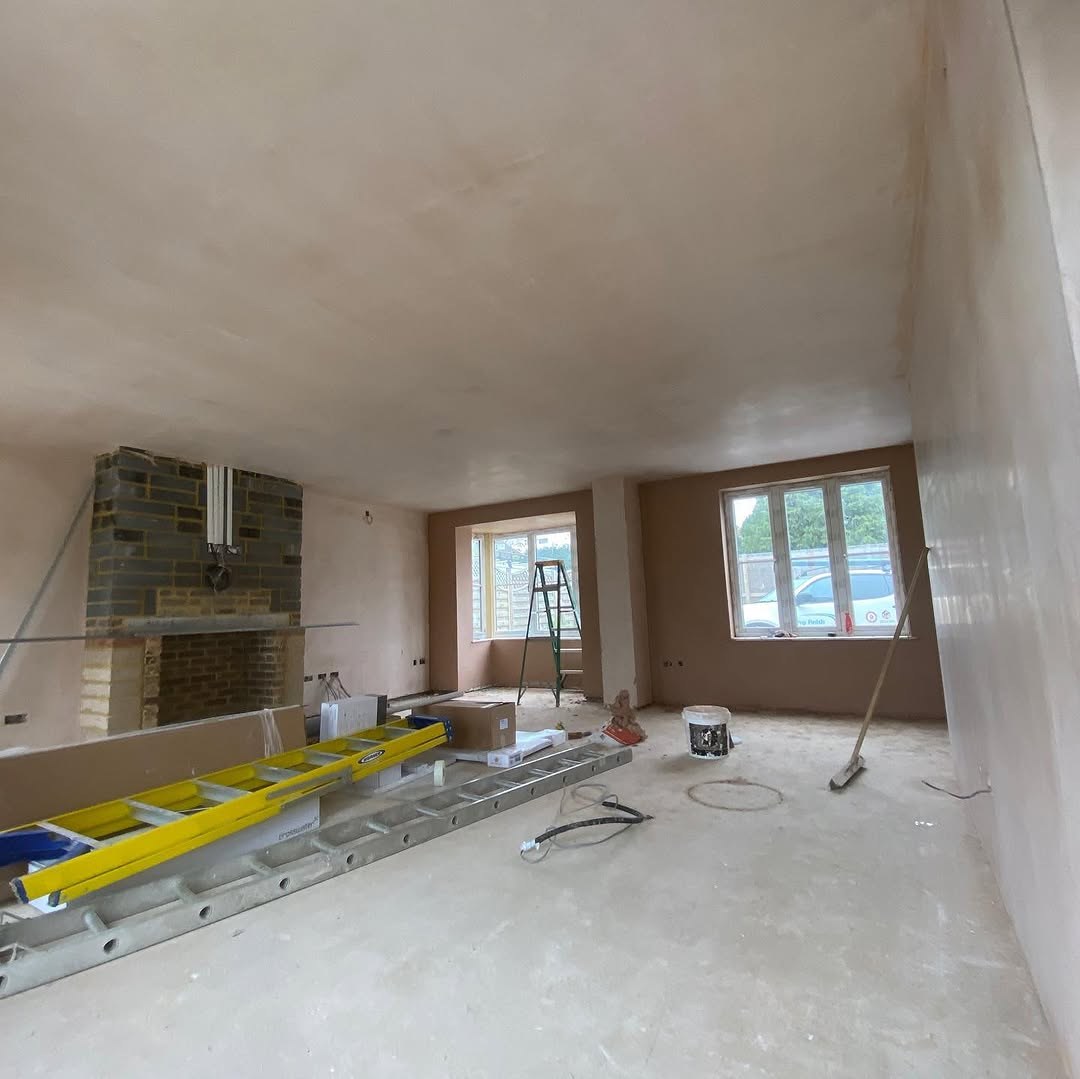
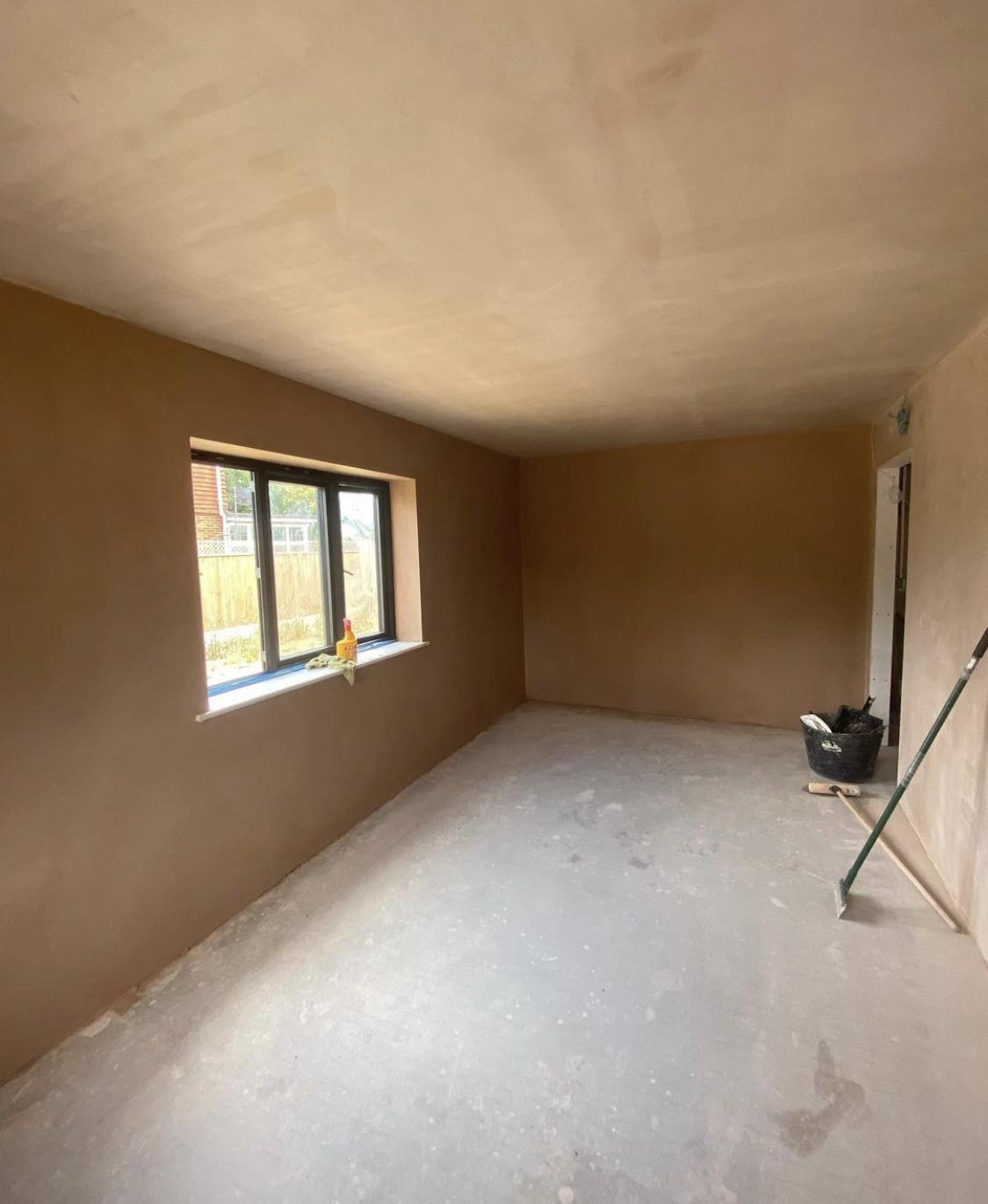
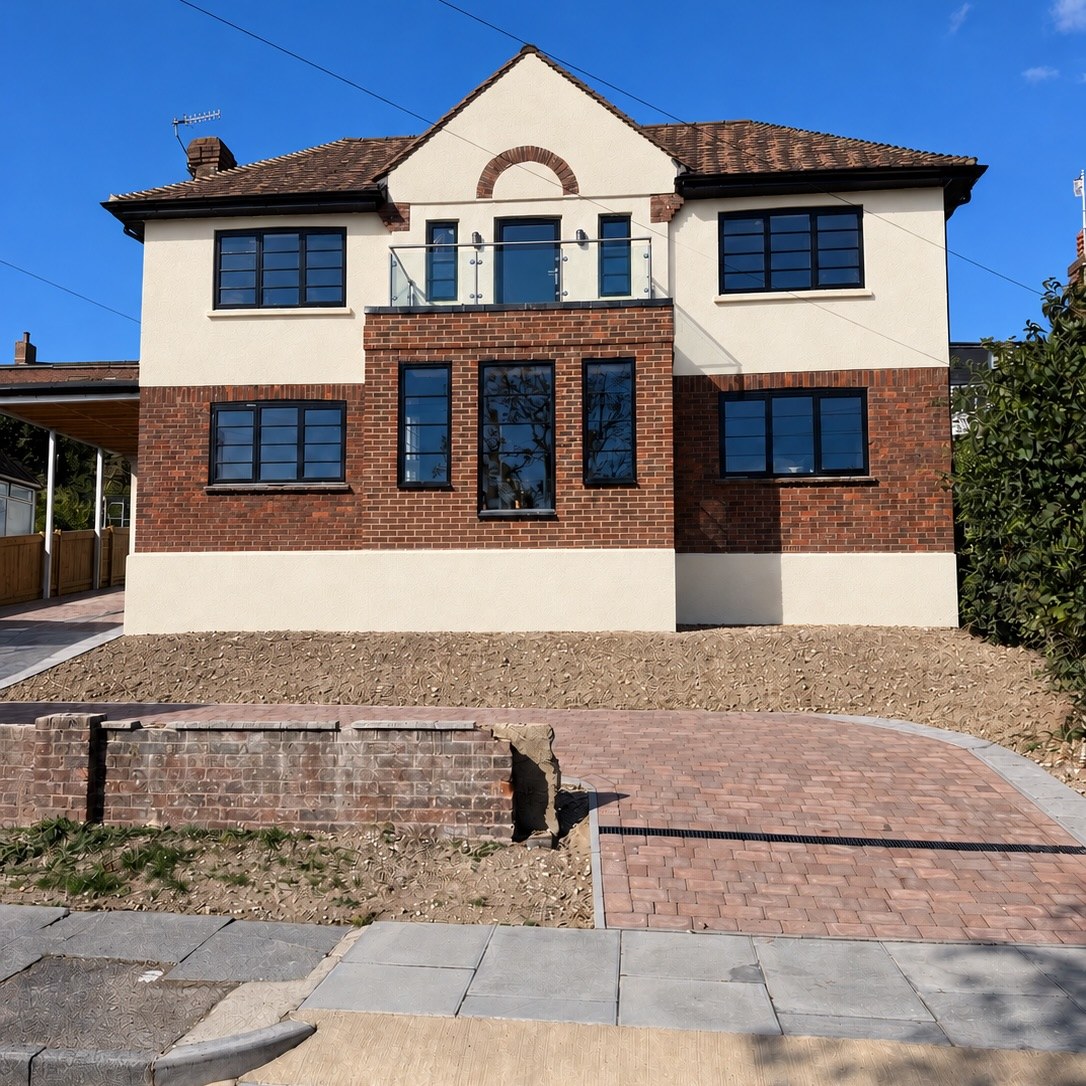
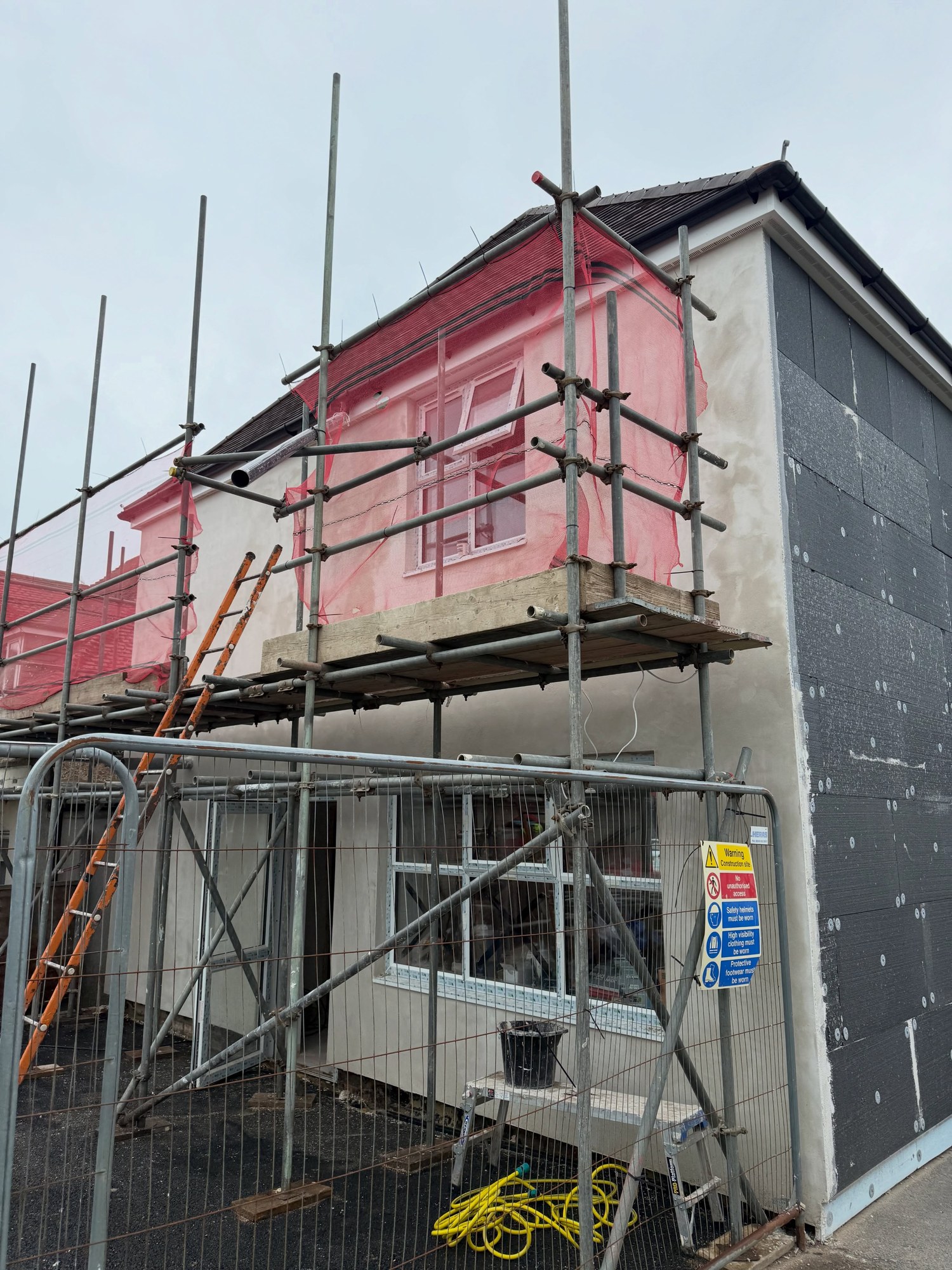
Our clearest local example is on Hurst Road, where a run down four bedroom house became a modern six bedroom home. The ground floor was given metal frame ceilings, the loft, new partitions and ceilings were insulated and boarded, worn and damaged walls were straightened with a floated backing coat, and the new blockwork extensions were solid plastered too. After that, every room in the house was plastered. You can see photos of it on our projects page, and the backing-coat stage is explained on our float and set plastering in Hassocks page.
How a plastering job runs here
Most jobs start with a look at the rooms, or a few clear photos sent over. That shows whether a wall can simply be skimmed or needs more work first, and whether wallpaper, loose plaster or a tired ceiling has to come out. On the day, floors and furniture are sheeted, the backgrounds are prepared, and the finish goes on in two coats of British Gypsum plaster, trowelled flat and smooth. New plaster then needs to dry right through before it is painted, which takes longer in winter or in a cold, unheated room, so book the decorator for once it has turned an even, pale colour.
If your home is one of the newer ones, such as those at Clayton Mills, finished in 2012, and the walls are plasterboard, the work is usually making good after alterations or a skim before redecorating. Older or newer, the starting point is the same: tell us how the room is used and what is wrong with it. There is more about the trade on our main plastering and skimming page, and the rest of our work in the village is on our Hassocks area page.