Period rooms in Montpelier and Regency Square
Brighton has an unusual concentration of period interiors. Montpelier and Clifton Hill were built up between the 1820s and the 1860s as streets of carefully designed, intricately detailed houses, and hundreds of buildings there are listed. Regency Square, built between 1818 and 1832, has 47 houses listed at Grade II*. By the middle of the 20th century most of its houses had become hotels, and the majority have since been converted into flats. Conversions like these usually mean new walls in old rooms, and where a partition meets the ceiling the cornice is often cut through, boxed in or lost altogether.
Matching what is already there
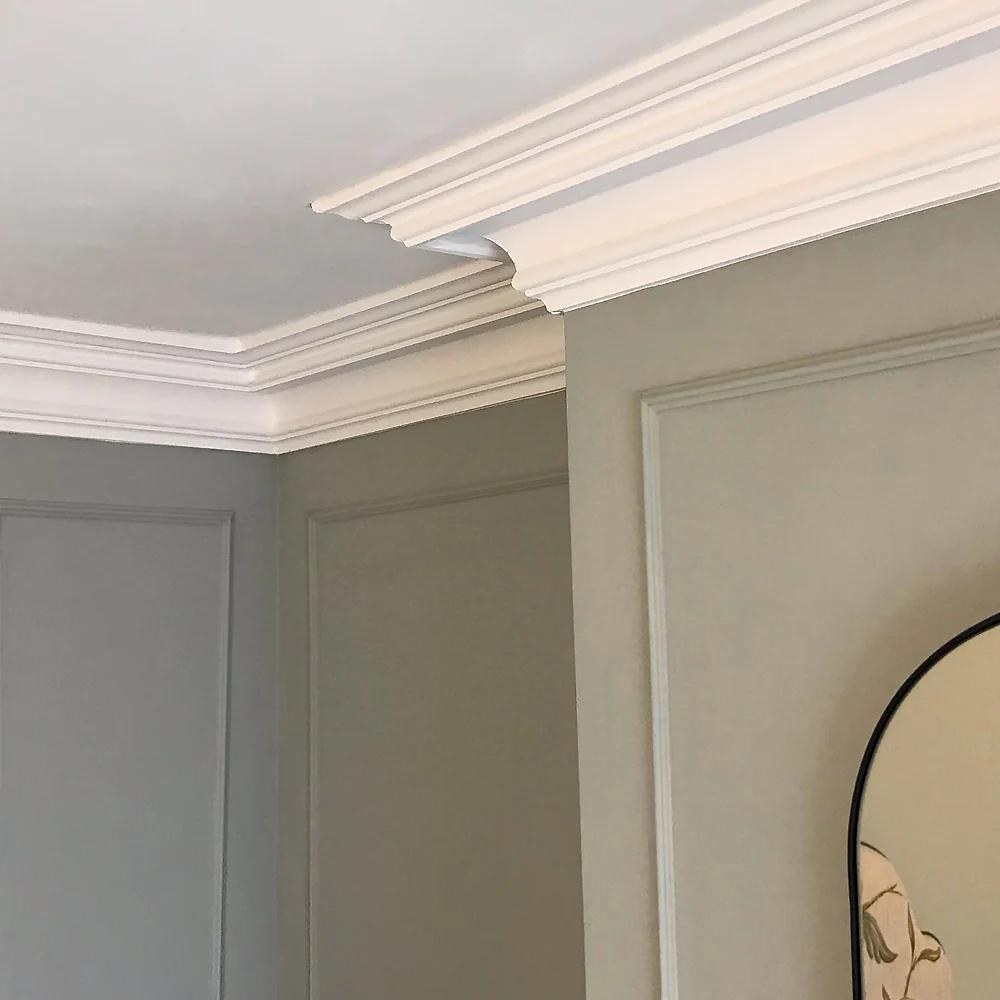
Where some original cornice survives, the aim is a replacement that sits with it rather than a near miss. We measure the projection onto the ceiling and the drop down the wall, photograph the profile end-on, and choose the closest fibrous plaster section. A run that has to meet an old one is set out so the joint falls in a corner or behind a natural break, mitres are cut cleanly, and the joints are filled so they disappear once painted. Ceiling roses and friezes are fitted the same way, centred on the room or the light point.
If your home is listed, remember that listing covers the inside as well as the outside. Check with the council before removing, altering or replacing historic plasterwork, and keep any loose pieces of original moulding, because they are the best guide to the profile.
Villas around Preston Park
The streets around Preston Park include late Victorian villas with timbered gables and decorated bargeboards, and later houses in the Queen Anne Revival and Arts and Crafts styles, some with wooden balconies. Inside, rooms of that era generally suit a moderate cornice, and panel mouldings or a dado rail can bring back the proportions of a hallway or staircase that has been stripped plain. Scale is the deciding factor. A ceiling well over the height of a modern room will carry a deep profile; a small bedroom carved out of a larger room will look better with a slimmer one.
Post-war homes and new flats
In newer homes across the city, a standard 127mm cove is the neat, understated choice, and it hides the hairline crack that often opens where wall meets ceiling. If you are getting rid of a textured ceiling first, our page on plastering over Artex in Brighton explains how it is made flat, and the cove then goes up once the plaster is dry. For walls or ceilings that need a fresh skim before any moulding is fitted, see plastering and skimming in Brighton.
Before you choose
- Measure the ceiling height and take a photo of each room.
- Note any original cornice, even fragments, and where it has been lost.
- Decide whether mouldings will be painted to match the ceiling or picked out.
- Settle lighting positions first, so a ceiling rose can be centred on the light point and no cable has to be chased through fresh plaster afterwards.
Pro Finish Plastering covers all of Brighton. Our main coving, cornice and mouldings page lists the full range, from corbels and arches to fire surrounds. Call 07824 165672 for a free, no-obligation quote.