Where patterned ceilings turn up in Brighton
Textured coatings were in fashion for a long stretch of the 20th century, so they can appear in almost any Brighton home that was built or redecorated in those decades. The post-war north of the city is a good example. Work on the Hollingbury estate began in 1946, and it became the town's largest post-war council estate: a mixture of bungalows, flats and houses, a large number of which have since been sold into private hands. Coldean and Bevendean were also laid out as housing estates on land Brighton absorbed as its boundaries grew. A swirl in a 1930s semi on one of the estates around old Patcham, such as Ladies Mile, may well have been added at a later redecoration rather than when the house was new, so the pattern is no guide to its age.
Check for asbestos before anything is disturbed
This is general safety advice rather than something we test for. Textured coatings put up before 2000 can contain asbestos. The fibres are only a hazard when the coating is broken up: sanded, scraped, drilled for downlights or chased for cables. Nobody can tell by looking, so if your ceiling is old and the history is unknown, ask an asbestos surveyor to sample it before anyone does work that would disturb it. Plastering over a sound coating leaves it sealed where it is; it does not remove it. If you want new downlights or a ceiling fan, decide where they go before the plaster goes on, and include those positions when the coating is checked.
How the pattern is buried
Our approach suits the low, flat ceilings of bungalows and post-war houses as well as taller rooms:
- Push and tap across the whole ceiling to find loose or hollow areas, especially along board joints.
- Sheet the floor and furniture, and mask light fittings.
- Coat the texture with a bonding agent so the plaster can grip it. No sanding, no scraping.
- Apply a first coat thick enough to fill every peak and trough and leave a level surface.
- Trowel a second, finishing coat to a smooth face, with beads on any exposed edges.
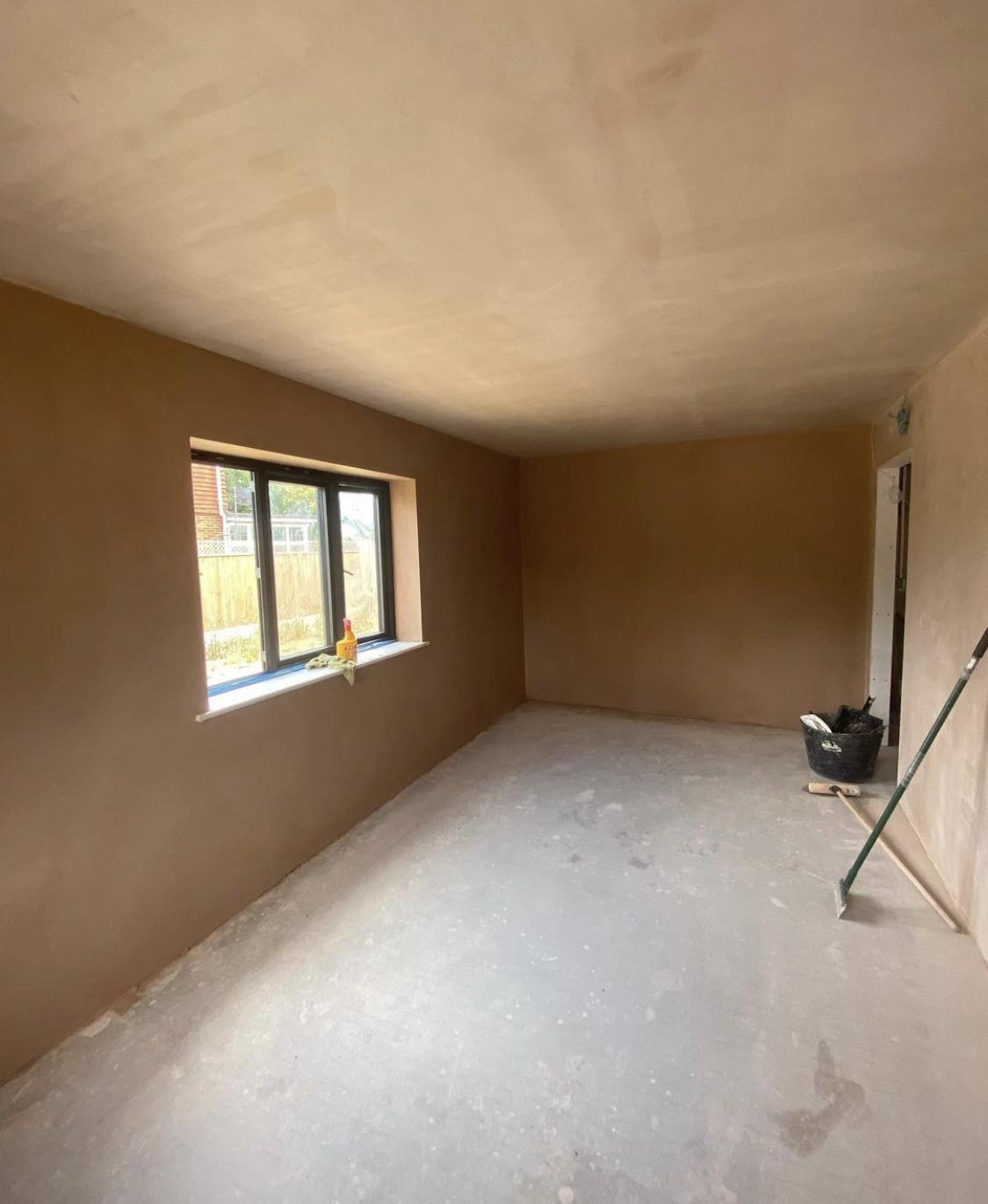
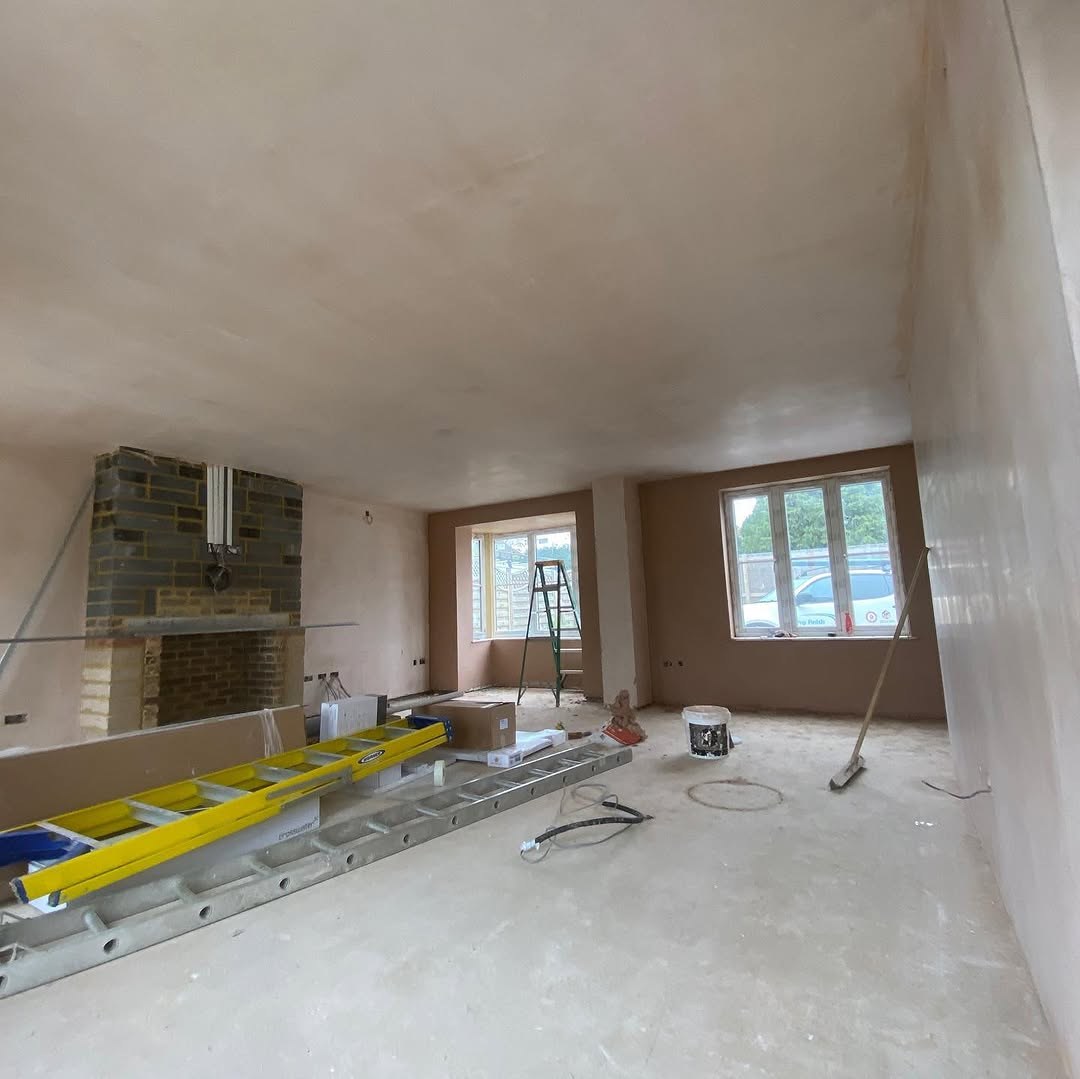
The result is a two-coat British Gypsum finish with no trace of the pattern once it is painted. For walls and rooms that need more general work at the same time, see our plastering and skimming service in Brighton.
When a skim is not enough
A ceiling that is cracked along its joints, bowing between joists or separating from the boards needs new plasterboard before any finish coat, either fixed over the old surface or in place of it. We will say which applies when we look at it. Once the ceiling is flat, it is the natural moment to add a cove or cornice, which older textured ceilings never suited: our coving and cornice work in Brighton covers the profiles we fit.
Keeping disruption down
Because the texture is sealed rather than sanded, there is little dust compared with stripping a ceiling. Rooms need clearing or furniture grouping in the middle under sheets, and the new plaster then needs warmth and air to dry before decorating. Pro Finish Plastering covers the whole of Brighton, and our main page on plastering over Artex has more detail. Call 07824 165672 for a free quote, with no obligation.