A town that grew in the textured-ceiling decades
Burgess Hill did much of its growing in the second half of the twentieth century, the period when textured ceilings were at their most popular. The population almost doubled between 1951 and 1961, when the town was described as the fastest growing in the South East, with 1950s housing such as Noel Rise. In the 1970s, land north of Folders Lane was released for substantial housing on the east side, and Oak Hall Park and Sheddingdean were also built in the later decades of the century. The 1980s and 1990s added planned estates on the west side, including West End Meadows and Hammonds Ridge. If your house dates from any of those decades, there is a fair chance a ceiling or two was given a swirl, stipple or combed pattern, either when it was built or at an early makeover.
Asbestos comes first
Textured finishes put up before 2000 may contain asbestos, and in Burgess Hill that takes in a large share of the town's homes. The danger lies in disturbing the material, by sanding, scraping, drilling or breaking it, and there is no way to tell just by looking at it. If you are unsure about yours, have a sample checked by an asbestos surveyor before anyone works on the ceiling in a way that would disturb it. Covering a sound coating with fresh plaster seals it where it is; it is not removal. We never sand textured finishes, and we do not test for or remove asbestos.
Turning a pattern into a flat ceiling
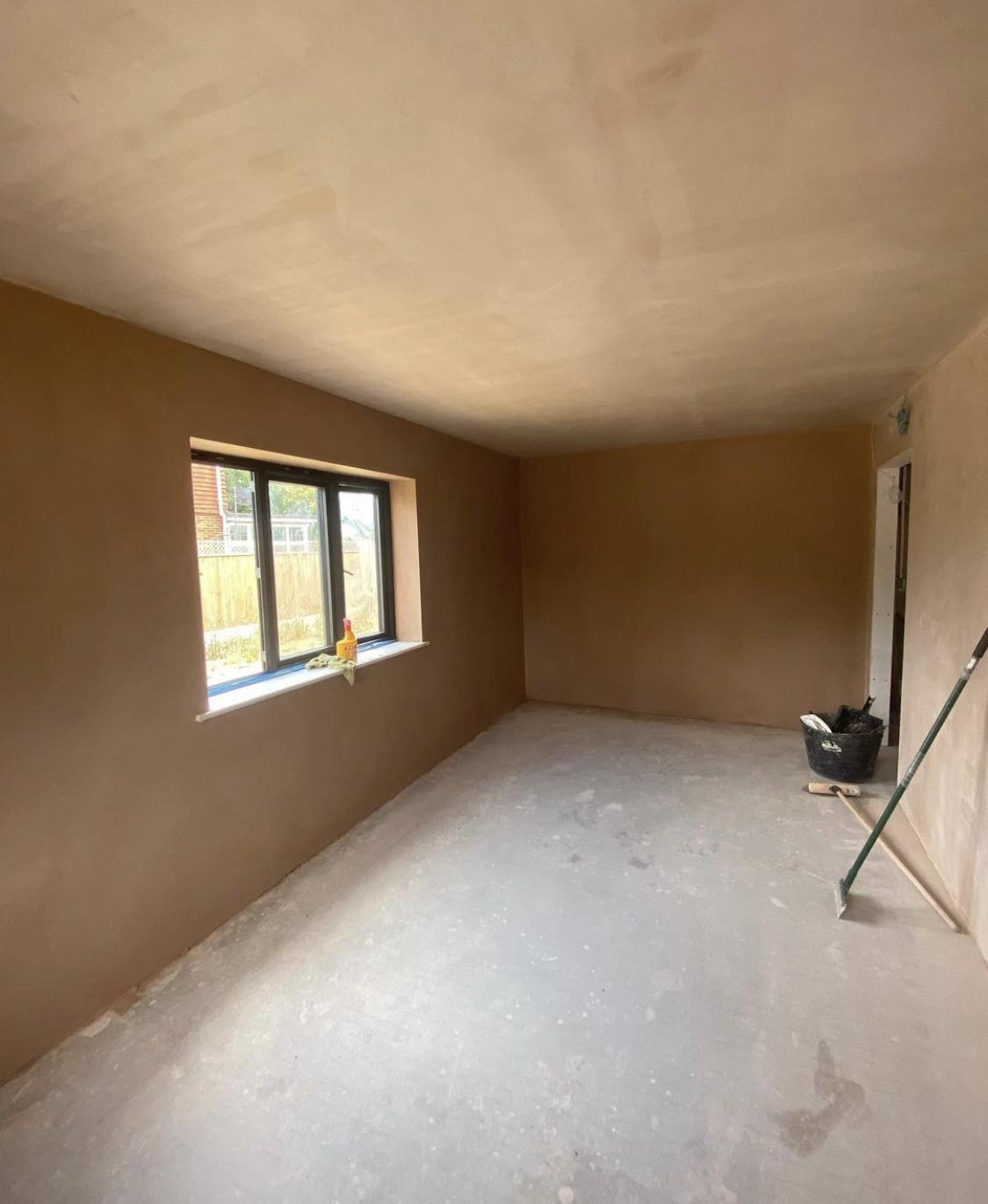
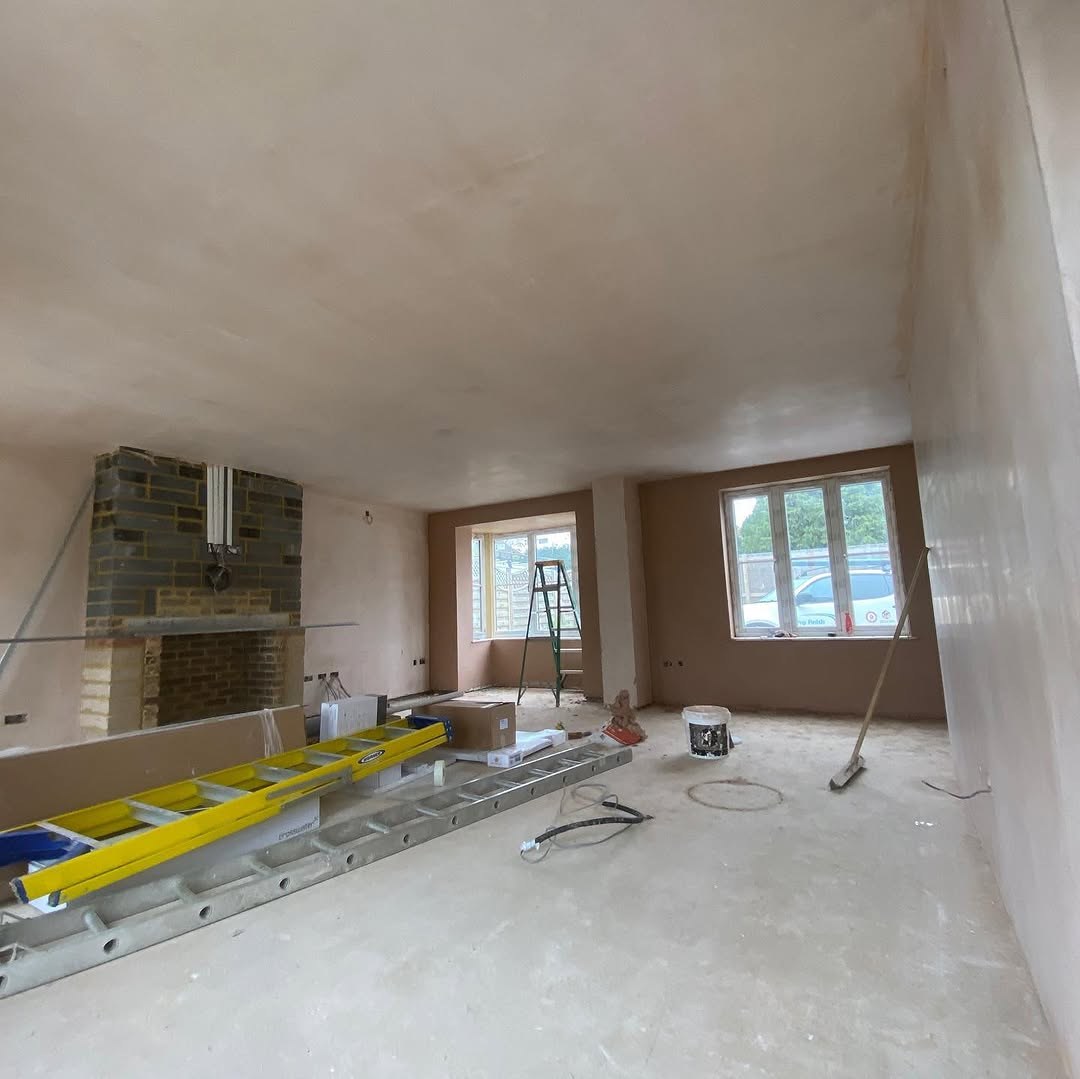
The ceiling is checked by hand for loose, flaking or hollow areas, and we note cracks, light fittings and any coving that will stay. Furniture is moved or covered and the floor sheeted. A bonding treatment goes on over the pattern, so the plaster grips without the texture being sanded, then a first coat is worked into the pattern until it is level. A second coat follows and is trowelled to a dense, smooth surface. Both coats are British Gypsum plaster, and the ceiling is ready to paint once it has dried evenly.
Rooms where the pattern shows most
Long through lounges, hallways and stairwells with patterned walls, and kitchens where new spotlights rake across a stipple are usually where people start. Walls are treated like ceilings, with beads on the corners so the edges come out crisp. If the ceiling under the pattern is cracked, sagging or pulling away from the joists, skimming it will not last, and new plasterboard should go up first; our plastering and skimming in Burgess Hill page covers that. Once a room is flat, a new cove or a period-style cornice can finish it, and coving and cornice in Burgess Hill explains the options. Where a hall, landing and stair ceiling run together as one surface, they are best done in a single visit so there is no visible join between days.
What to tell us
Let us know roughly when the house was built, whether the ceilings have been painted many times, and whether anyone has drilled into them recently. Photos taken with the light low across the ceiling show how deep the pattern is. Our main Artex plastering page explains the method in more detail, and our Burgess Hill area page lists the rest of our services in the town.