Where textured ceilings still turn up in Rustington
Rustington grew fastest in the decades when textured ceilings were the fashion. The parish's Village Design Statement, summarised in the 2013 State of the Parish report, describes whole districts of detached and semi-detached bungalows built in the 1950s and 1960s, other neighbourhoods of mainly pre-war bungalows, semis and terraces, and blocks of flats facing the sea. Homes of those ages are the ones most likely to still have a swirl or stipple overhead, and the pattern often carries on down the hall, up the stairwell or across a chimney breast.
People usually want it gone for practical reasons as much as looks. Ridges hold dust and cobwebs, a patterned ceiling makes a low bungalow room feel lower, and modern spotlights throw a shadow off every peak.
Get older coatings tested first
Any textured coating put on before 2000 may contain asbestos. You cannot see it, and it only becomes a hazard if the coating is broken up: sanded, scraped, drilled or chipped. If your ceiling is from before then, or you have no idea of its age, ask an asbestos surveyor to sample it before any work that would disturb it. Skimming over a coating that is sound keeps it sealed where it is, but it does not take it away. Testing and removal are specialist jobs outside plastering, so if a survey finds asbestos and you want it removed, that happens before we start.
Turning a patterned ceiling flat
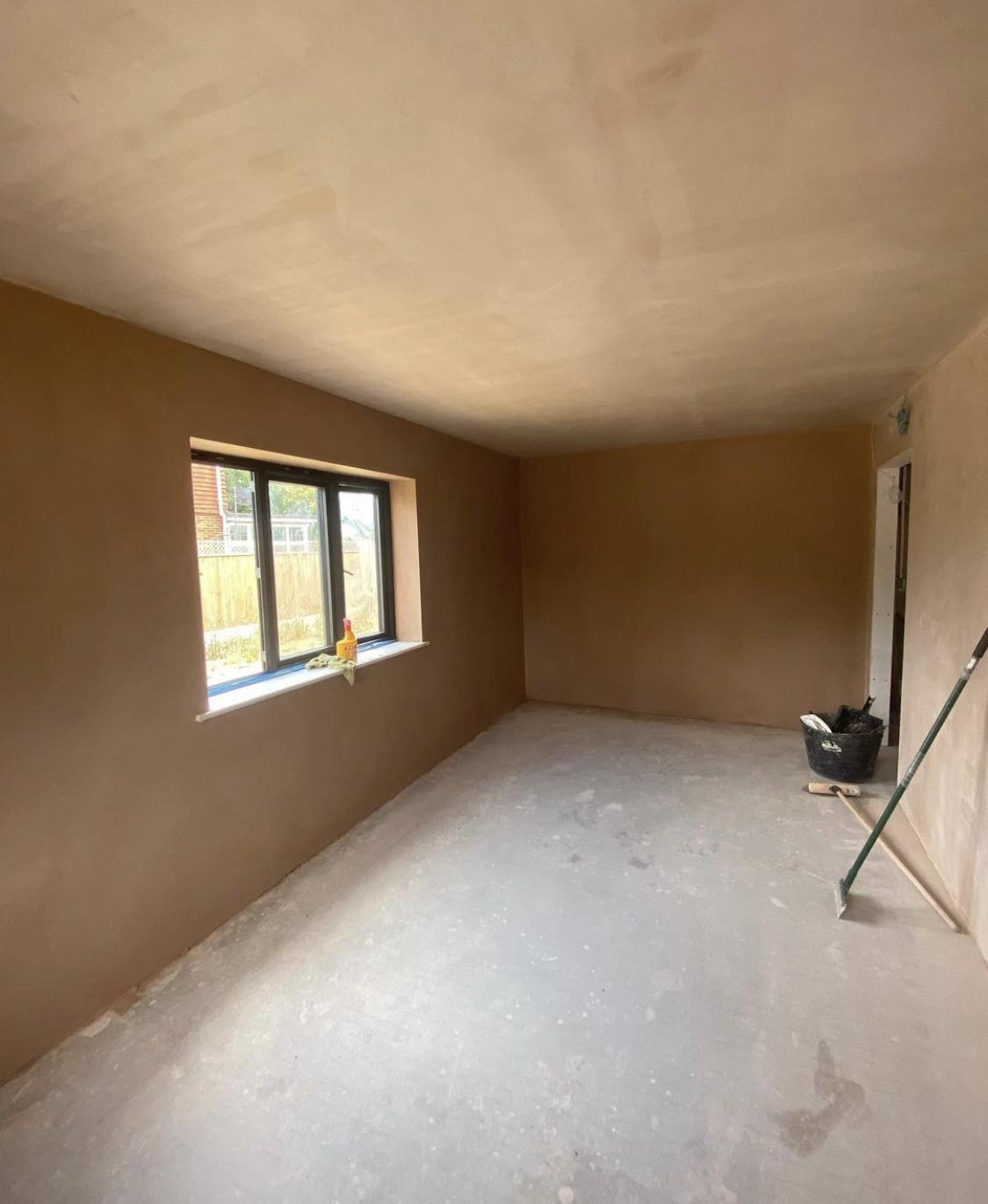
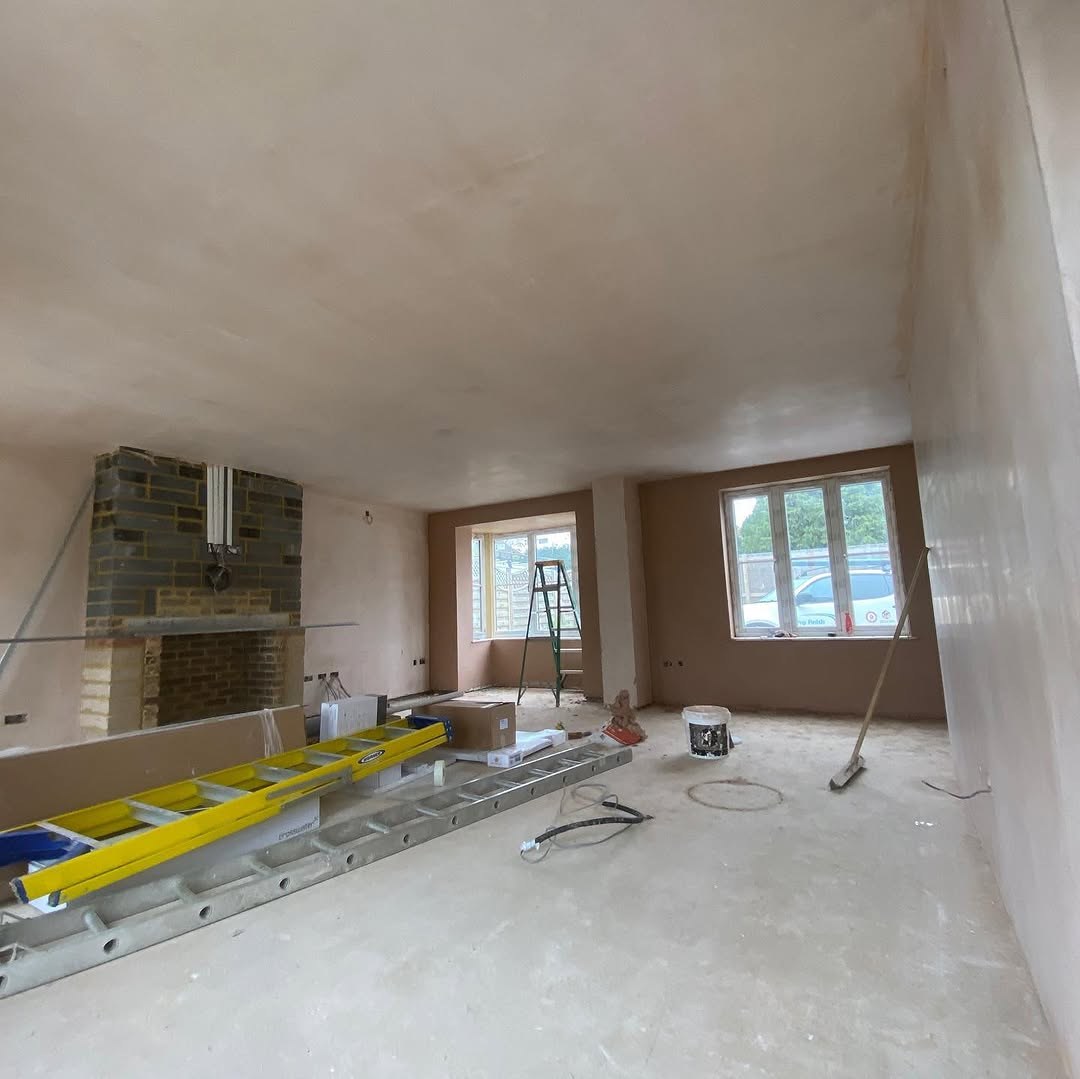
The order rarely changes. Furniture is moved out or sheeted, floors are covered and light fittings are protected. The texture is then sealed with a bonding treatment instead of being rubbed down, so no dust comes off it. A first coat of plaster fills the ridges and hollows level, and a second is trowelled to a closed, smooth surface, both in British Gypsum plaster. Bungalow ceilings can be reached from a low platform, which keeps the room tidy, and patterned walls can be done in the same visit. Once it has dried, the new surface takes a thinned mist coat and then emulsion, and new downlights or a pendant no longer throw shadows across it.
When a skim is not the answer
Plastering over a pattern only works on a firm base. If a ceiling sags, sounds hollow or has cracks that open and close with the seasons, the boards behind need refixing or overboarding before any plaster goes on. A crack that runs dead straight usually marks a board joint; one that wanders, or a bulge around a light fitting, deserves a closer look. Once the ceiling is flat, it is a good moment to add a crisp cove or a deeper cornice, which we can fit as part of the same job (coving and cornice in Rustington), or to refresh the walls too with a skim coat in Rustington.
Flats and shared buildings
In a block of flats, your ceiling may sit beneath a neighbour's floor, and the lease may say who is responsible for it. Talk to the managing agent before booking, especially if a survey finds asbestos in a coating that also runs through communal areas. You can find our other work in the village on the Rustington page, and more detail in our main guide to plastering over Artex. For free, no-obligation advice, call 07824 165672.