Plastering Over Artex Ceilings: Why Testing Matters Before You Start
Artex ceiling looking tired? We explain the honest options for plastering over Artex in West Sussex homes, from skimming to overboarding. Call 07824 165672.

Artex ceilings: still in a great many homes
Walk into almost any British home built or decorated between the 1960s and the early 1990s, and there is a decent chance at least one ceiling is covered in Artex. Swirls, stipples, comb patterns, heavy peaks. It was cheap, quick to apply and hid a multitude of sins. Decades later, most homeowners just want it gone.
The good news is that an Artex ceiling can almost always be made smooth again. The less straightforward news is that there is no single answer for every ceiling. The right approach depends on the age of the coating, how thick it is, the condition of the ceiling underneath and the finish you want to end up with.
This article walks through the real options, explains what we look at before deciding, and covers a few things worth knowing before you book anyone in.
The asbestos question: what you must check first
Before anything else, this needs saying clearly. Artex and other textured ceiling coatings applied before 2000 can contain chrysotile (white) asbestos, which was added to strengthen the coating. The coating is generally considered low risk when it is left undisturbed and intact. The risk rises sharply when it is sanded, scraped or otherwise disturbed.
We do not test for asbestos and we do not remove it. If your ceiling was textured before 2000, or you are not sure when it was done, arrange a test through a qualified specialist before any work begins on that ceiling. This is not a technicality, it is a straightforward safety step. Once you have a clear result, the job can be planned properly.
Three options for dealing with Artex ceilings
1. Skim plastering over the Artex
This is the most popular choice for ceilings where the texture is not too deep and the surface underneath is sound. A bonding agent, usually diluted PVA, goes across the entire surface and is left to reach the right tack, then the ceiling is skimmed. Done well, the result is a smooth, flat ceiling ready for decoration.
The key words there are "done well". Skimming over Artex is more demanding than skimming bare plasterboard. The texture needs to be fully filled before the finishing coat goes on, and the whole surface needs careful preparation. If the Artex has been painted many times over the years, that paint can affect adhesion, so preparation matters enormously.
We use British Gypsum products throughout our plastering work, and our plaster finish is completed in two coats. On a ceiling, where every flaw shows once the light rakes across it, a consistent material and a proper two-coat finish make a real difference.
2. Overboarding with plasterboard
Where the Artex is very deep, where the ceiling has been painted so many times that adhesion is uncertain, or where the homeowner simply wants a more predictable route to a flat surface, overboarding is often the better call.
This means fixing a layer of plasterboard over the existing ceiling, then skimming the board smooth. The boards add some weight to the ceiling, so the joists need to be in good condition before this route is chosen. Done properly, overboarding gives a crisp, flat result, and the old Artex is sealed away underneath, undisturbed.
One practical point worth knowing: overboarding lowers the ceiling very slightly. In most rooms this is barely noticeable, but in a room with a low ceiling it is worth factoring in before you decide.
3. Full strip and replaster
Sometimes the right answer is to take the ceiling back and start again with a proper two-coat plaster system. This tends to be the right call when the ceiling is in genuinely poor condition, when there are cracks or movement, when old plaster has come away from the laths behind it (a common problem in older lath and plaster ceilings), or when a full refurbishment is already underway and there is no reason to keep the existing ceiling. On any pre-2000 textured ceiling, this option needs a clear asbestos test result first.
It is more disruptive than the other two options, but it gives a clean slate and a ceiling that will last.
What we look at before recommending an approach
When we look at a ceiling for a quote, we are checking several things at once:
- The depth and profile of the Artex pattern
- How many layers of paint are on top
- Whether the plaster or board underneath is sound and well fixed
- The age of the coating and whether an asbestos test has been done
- What the homeowner wants to do with the room afterwards
- Whether there are any signs of damp or staining on the ceiling
A light stipple on a sound plasterboard ceiling is a very different job to a deep swirl on an old lath and plaster ceiling, and the quote should reflect that.
PVA and preparation: why this stage matters
A common question is whether PVA is really necessary before skimming over Artex. The answer is yes. An untreated Artex surface is very absorbent and will pull the moisture out of the plaster far too quickly, making it hard to work and more likely to crack as it dries.
The preparation stage is not glamorous, but it is what separates a ceiling that lasts from one that starts showing problems within a year. The PVA goes on at the right dilution, is left to reach the correct tack, and then the plaster goes on. It is straightforward, but it has to be done properly.
Plastering over Artex walls: the same rules apply
Artex was not only used on ceilings. Some homes have it on walls too, particularly in hallways and living rooms. Everything above applies equally to walls: the same asbestos caution, the same preparation steps, the same choice between skimming, overboarding or stripping.
What happens after plastering: new plaster and decoration
Fresh plaster needs time to dry before it can be decorated. A skim coat usually needs several days to a week, and longer on a ceiling in a cold or poorly ventilated room, or where a thicker base coat has gone on first. The plaster is ready when it has turned an even, pale colour with no darker patches. Painting too soon is one of the most common and avoidable mistakes.
The first coat of paint on new plaster should be a mist coat: a diluted emulsion that soaks into the absorbent surface and gives the following coats something to grip. Full-strength emulsion straight onto new plaster tends to sit on the surface and can peel. Decorating is outside our scope, but it is worth knowing before you book a decorator in.
Frequently asked questions
Does Artex contain asbestos?
It can do. Artex and similar textured coatings applied before 2000 may contain chrysotile asbestos. The coating is generally low risk when left intact, but it should not be sanded, scraped or disturbed without a test by a qualified specialist first. We do not carry out asbestos testing or removal.
Can you plaster over Artex that might contain asbestos?
Skimming over intact Artex, rather than removing it, is generally considered lower risk than sanding or scraping, but you should still get professional advice and a test result before any tradesperson starts work on a pre-2000 ceiling. It is worth having that answer before any work is booked.
Should old paint be removed before plastering over Artex?
Not removed, but it does need to be in good condition. Flaking or poorly bonded paint will compromise the adhesion of the new plaster, so loose or unstable areas are dealt with first. A properly applied PVA bonding coat then gives the plaster a reliable surface to key into.
Is there a thick paint or coating that covers Artex without plastering?
There are thick paint products marketed as Artex cover-ups. In our experience, they rarely give a truly smooth, flat result. They can soften the texture but they do not eliminate it, and the result often looks painted over rather than properly finished. For a genuinely flat ceiling, skimming or overboarding is the reliable route.
A real example
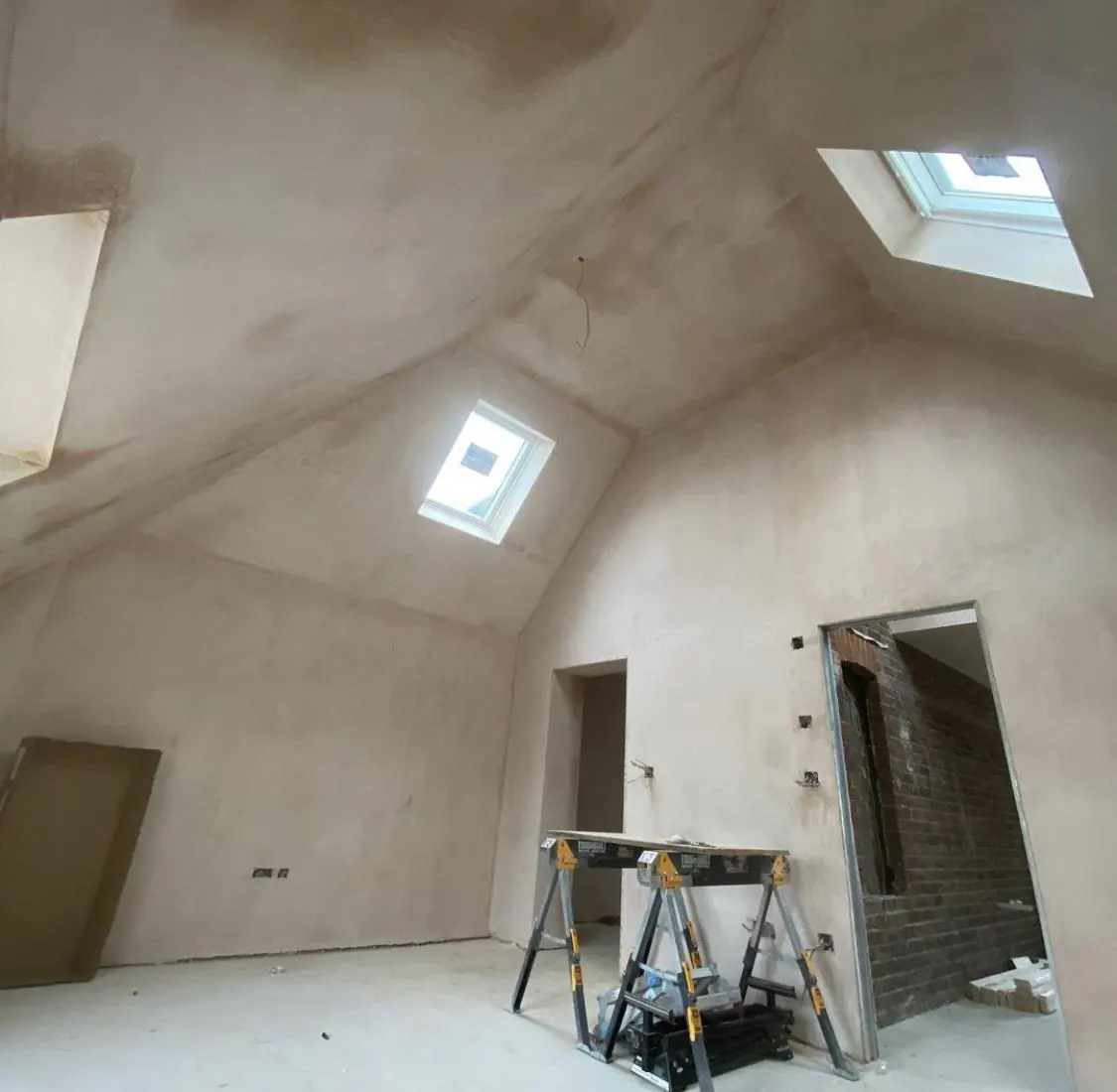
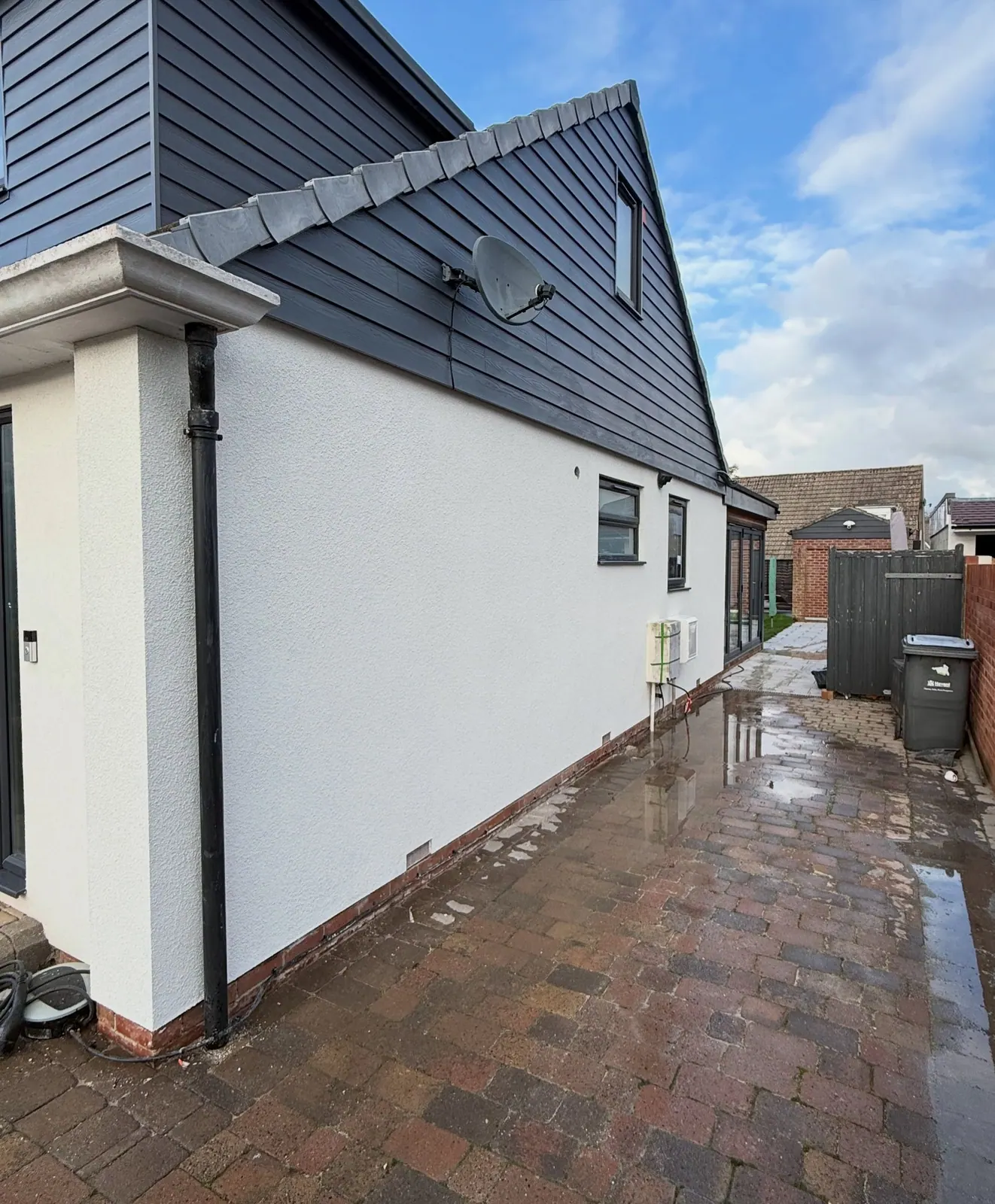
At our Hurst Road project in Hassocks, a run down four bedroom house was turned into a modern six bedroom home. The scope included metal frame ceilings to the ground floor, insulating and plasterboarding the loft area, partition walls and ceilings throughout, float and set to damaged walls and the blockwork extensions, and plastering throughout. Whole-house jobs like that mean dealing with a mix of existing surfaces, from sound walls to badly damaged ones.
You can see more on our projects page.
Working across West Sussex
We are based in Worthing and work across West Sussex, from Chichester and Bosham to Burgess Hill and Haywards Heath, and along the coast from Littlehampton through Worthing to Shoreham-by-Sea. Whether it is a single Artex ceiling or a full house replaster, we quote each job individually once we have seen what is needed.
Our plastering page has more detail on the work we carry out, and our dry lining and insulation page covers overboarding and ceiling systems in more depth.
If you have an Artex ceiling you want sorted, get in touch and we will arrange to take a look. Quotes and advice are free and without obligation, Monday to Friday, 08:00 to 17:00. You can also call us on 07824 165672.