Damp Patches and Plaster Repairs in Seafront Homes: Goring-by-Sea to Worthing
Damp proofing advice for coastal homes across West Sussex, from Worthing and Goring-by-Sea to Chichester and Bognor Regis. Call us for a free quote.

Why Coastal Homes in West Sussex Get Damp Differently
Salt air, driving rain off the Channel, and older building stock that was never designed for modern central heating. That combination makes damp a recurring problem for homeowners along the West Sussex coast, from Goring-by-Sea and Ferring right through to Littlehampton, Rustington and Bognor Regis.
We see it regularly. A homeowner notices a patch of blown plaster near a window, or black mould creeping up a corner wall, and assumes it is a simple fix. Sometimes it is. But coastal properties have a habit of presenting symptoms that look like one thing and turn out to be another. Getting the diagnosis right before reaching for filler or paint is the only way to stop the same problem coming back six months later.
This article explains what we actually do when we are called out to a damp issue in a coastal home, why the right repair matters, and what signs to watch for before the problem gets worse.
The Difference Between Rising Damp, Penetrating Damp and Condensation
These three are regularly confused, and treating the wrong one wastes time and money.
Rising damp travels upward through masonry from the ground. It tends to appear as a tide mark on lower walls, often with white salt deposits (efflorescence) and plaster that feels soft or crumbles away. Older properties in Worthing, Shoreham-by-Sea and Lancing, where the original damp proof course has failed or was never fitted properly, are particularly prone to it.
Penetrating damp comes in horizontally through the external wall. In coastal areas this is often linked to failed or deteriorating render, cracked pointing, or porous masonry that has been battered by westerly weather. Properties facing the sea between Aldwick and Chichester are exposed to this year after year.
Condensation is caused by warm, moist air hitting a cold surface and releasing moisture. It often shows as black mould on ceilings, around window reveals or in corners. It is not a structural damp problem, but it does cause real damage to plaster and decoration if left untreated.
We explain the distinction in more detail in our article on blown plaster and damp patches in coastal homes, which is worth reading if you are unsure what you are dealing with.
What Damp Proofing Actually Involves
When we carry out damp proofing work, the approach depends entirely on the cause. There is no one-size-fits-all solution, and anyone who tells you otherwise without looking at the property first is guessing.
For rising damp, we use damp course injection. This involves drilling a series of holes at low level in the affected wall and injecting a specialist chemical cream that forms a new barrier within the masonry. Once the wall has been treated, any damaged plaster has to come off. Damp-affected plaster holds salt contamination that will push through new decoration even after the moisture source is resolved. We re-plaster using a sand and cement base coat, sometimes with a waterproof additive, before finishing with a skim coat.
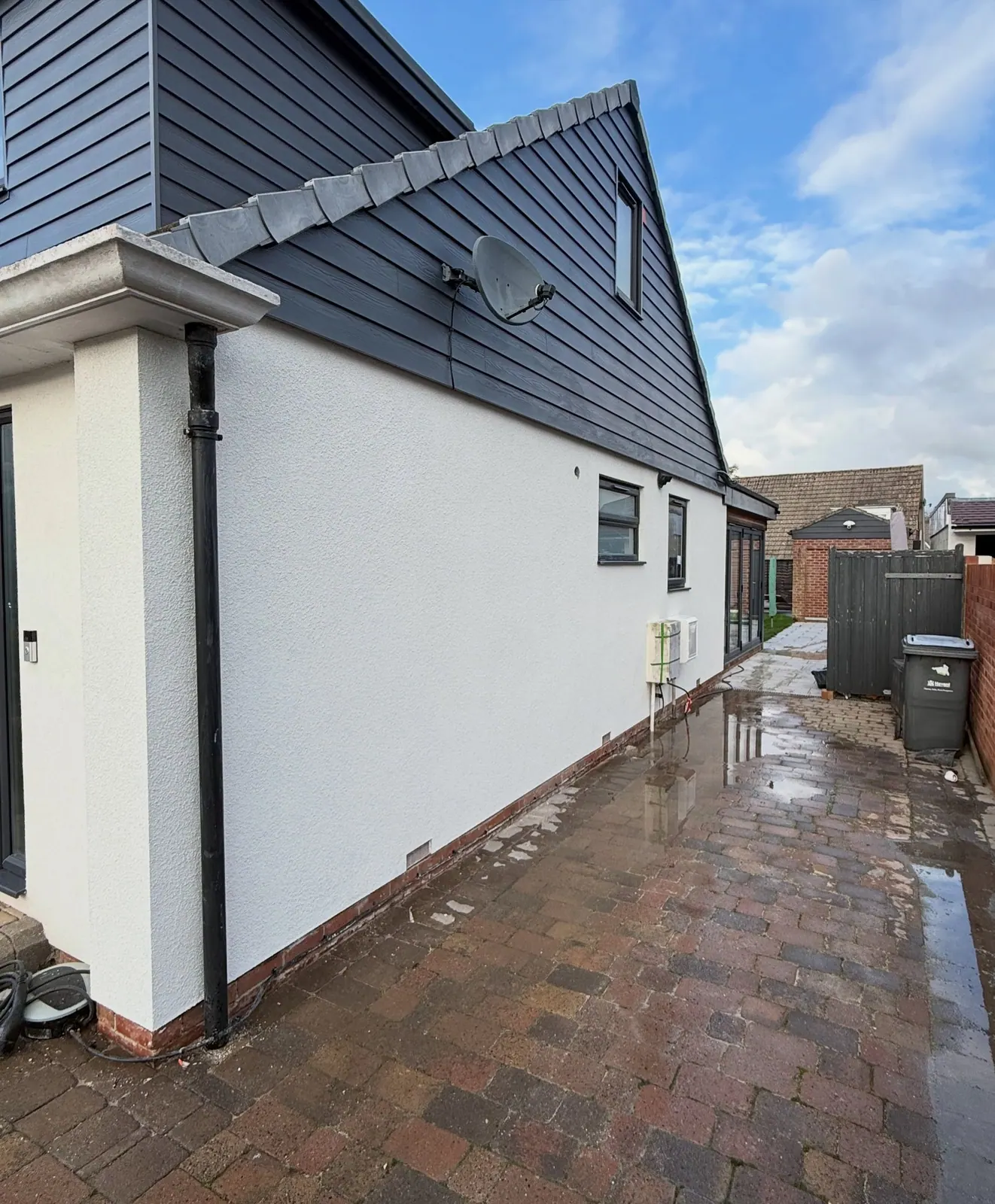
For penetrating damp through external walls, the fix often starts outside. Cracked or hollow render needs to come off and be replaced properly. We work with a range of external render systems depending on the property and its exposure. K Rend and monocouche systems offer good weather resistance and are popular on newer homes and extensions across West Sussex. For older or listed properties, a lime-based render or lime plaster is often the right choice because it allows the wall to breathe rather than trapping moisture inside the masonry.
For tanking, where a basement, cellar or below-ground space needs to be made watertight, we apply a multi-coat waterproof tanking system to the walls and floor. This is a more involved process, but it is the correct solution when a space is below ground level and subject to hydrostatic water pressure.
For condensation and black mould, the fix involves treating the mould, improving ventilation and sometimes insulating the affected surfaces to raise their temperature. Dry lining with insulated plasterboard can make a significant difference in rooms where cold bridging is the root cause.
Render and Damp Proofing: Why They Often Go Together
On coastal homes, external render and damp proofing are closely linked. Render that has cracked, delaminated or become porous is one of the most common routes for water to get into walls in places like Angmering, East Preston and Ferring.
We are often called in where a homeowner has been patching the same section of render for years without lasting results. The honest answer in those cases is usually that the whole elevation needs to come off and be redone properly, with the correct specification for the exposure level.
For a seafront or near-seafront property, silicone render is worth considering. It is flexible, water-repellent and breathable, which suits the coastal environment well. We completed a project in Saltdean where a reconfiguration and extension was finished externally with a silicone render system, finished in the colour Prosecco. The flexibility of the system means it handles the thermal movement of a building far better than a rigid sand and cement coat.
Where the budget and the building suit it, through-coloured monocouche render is another solid option. It eliminates the need for painting and holds its appearance well in exposed locations.
What Happens to the Plaster After Damp Proofing
This is the part that catches people out. Damp proofing treats the source of moisture, but the damaged plaster still has to go. You cannot simply skim over blown, salt-contaminated or soft plaster and expect the result to last.
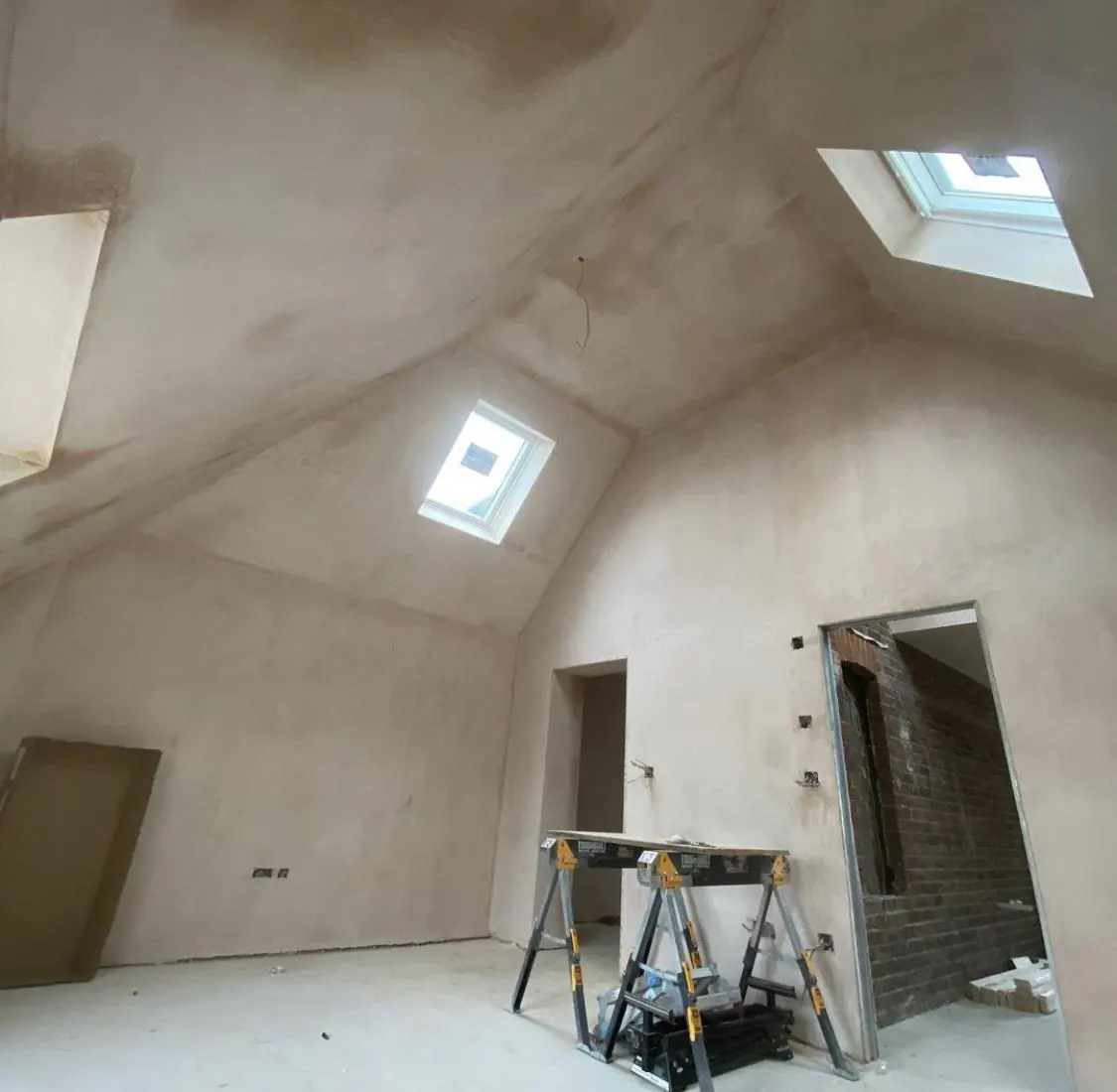
After rising damp treatment, we typically hack off plaster to at least 300mm above the highest visible tide mark. The wall then needs time to dry before we re-plaster. The new plaster coat also needs time to dry fully before it is decorated, and the first coat of paint should always be a mist coat (a diluted emulsion) rather than a full-strength vinyl. Sealing new plaster with undiluted paint traps moisture inside and causes peeling.
We go into the detail of drying times and mist coats in the context of new plasterwork, but the same principles apply after damp repairs.
Signs You Should Call Us Before Winter
Coastal West Sussex winters are wet and windy. Problems that are manageable in summer tend to get significantly worse between October and March. If you are seeing any of the following, it is worth getting someone out to look before the weather closes in.
- Plaster that sounds hollow when you tap it, particularly on ground floor or external walls
- A tide mark or white salt staining on lower walls
- Black mould returning in the same spot after cleaning
- Render that is cracking, bubbling or pulling away from the wall
- A persistent damp smell in a room, even when it appears dry
- Damp patches appearing on walls after heavy rain
Properties in Steyning, Findon and Horsham are less exposed to sea air, but they have their own damp challenges, particularly in older stone and brick buildings where original lime mortars have been repointed with hard cement, trapping moisture in the fabric of the wall.
A Note on Artex and Old Coatings
If your damp investigation involves disturbing old Artex or textured coatings, bear in mind that coatings applied before 2000 can contain asbestos. These should be tested by a specialist before anyone sands or scrapes them. We do not carry out asbestos testing or removal, but we will flag it if we see it. Our article on plastering over Artex ceilings and why testing matters covers this in full.
Frequently Asked Questions
Can you just paint over damp patches on a wall? No, and it will not last. Damp-proof paint applied over an active damp problem will eventually fail as moisture pressure builds behind it. The source of the damp needs to be identified and resolved first, and any damaged plaster needs to come off before re-plastering. Painting over the symptom is a short-term cover-up, not a repair.
How long does a wall need to dry after damp proofing before it can be re-plastered? This depends on the extent of the damage, the thickness of the wall and the time of year. We assess each job individually. Rushing this stage is one of the most common reasons damp repairs fail. We will give you a realistic timeline when we visit.
Is rising damp common in West Sussex coastal properties? It is not uncommon, particularly in Victorian and Edwardian terraces in Worthing, Lancing and Shoreham-by-Sea where original damp proof courses have failed or were never installed. That said, condensation is often misdiagnosed as rising damp. Getting the right diagnosis matters, because the treatments are completely different.
Do you carry out damp proofing and the plastering as part of the same job? Yes. We treat the damp and carry out all associated plaster repairs and re-plastering as part of the same project. You do not need to find separate contractors for each stage. This makes the whole process more straightforward and means the plasterwork is specified correctly for the post-treatment conditions.
Get in Touch
If you have a damp problem in a coastal property across West Sussex, whether it is in Worthing, Chichester, Bognor Regis, Bosham or anywhere in between, we are happy to come and take a look. We offer free, no-obligation advice and quotes, and we will tell you honestly what we think needs doing and why.
Call us on 07824 165672, Monday to Friday, 08:00 to 17:00, or get in touch via our contact form and we will get back to you.